The January issue of Chicago Innerview is now available online. I have contributed a write-up on Chicago group Plane. Follow the direct link to read the article:
http://www.chicagoinnerview.com/archives/jan07_previewB.htm
And as a special feature to the "print" version of the magazine, I have contributed to the Top 6 Albums of 2006 piece. For those who can not pick up a copy of the magazine, I have re-printed my list for Getting In Tune.
Enjoy!
Monday, January 01, 2007


Top 6 Albums Of 2006
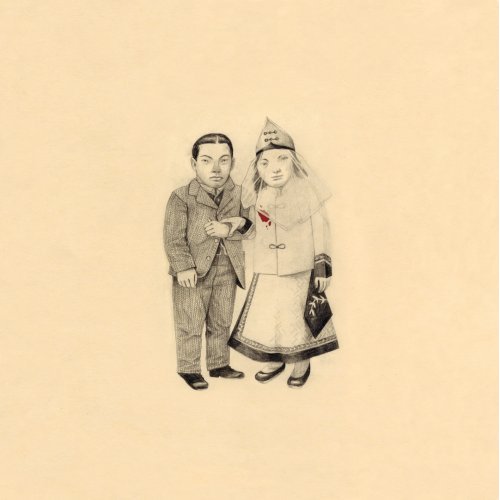 1. The Decemberists - The Crane Wife (Capitol)
In a time of fast-paced multimedia consumption that grows faster with each second, it's fairly easy for the gems of solid songwriting and marvelous storytelling to go unnoticed. By now, it's not hard to notice the steady rise of the Decemberists. Singer/songwriter Colin Meloy's ability to draw from a world long past and bring it to the present seems almost effortless.
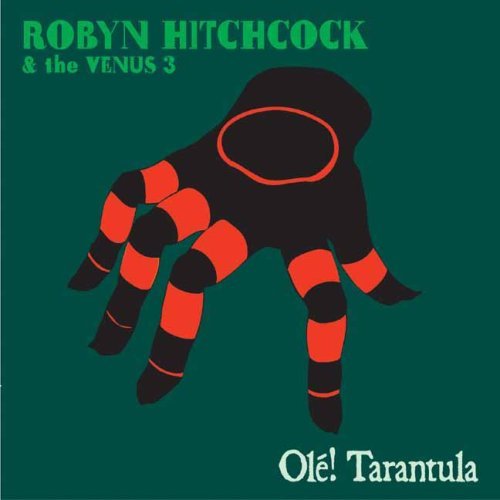 2. Robyn Hitchcock & The Venus 3 - Ole! Tarantula (Yep Roc)
Leading off with "Adventure Rocket Ship", Robyn Hitchcock brilliantly nails the psychedelic-pop sound of the '60s with members of R.E.M. serving as his backing band. The diversity of styles throughout Ole! Tarantula makes it an album with everything; from the country touch on the title track to the sneering swagger of "The Authority Box."

3. Robert Pollard - From A Compound Eye (Merge)
It feels like it was just yesterday when Guided By Voices drunkenly bid farewell at Metro on a New Year's Eve that many are still trying to sober up from. The band is no more, but Robert Pollard remains. From A Compound Eye consistently hits the mark, which is saying a lot since past Pollard efforts tended to resemble erratic EKG readings.
 4. Elf Power - Back To The Web (Rykodisc)
Menacing, haunting, and beautiful. Back To The Web is like some long walk through the forest at night; there's a peacefulness about it all, but tension reaches for your ankles when you least expect it.

5. Paul Weller - Catch-Flame! (Yep Roc)
Paul Weller was in top form while touring for his latest solo album As Is Now (2005). Spotlighting a show in London near the end of that tour, 2006's live album Catch-Flame! dishes out the jam from every era of Weller's career with a sheer excitement that never lets up.
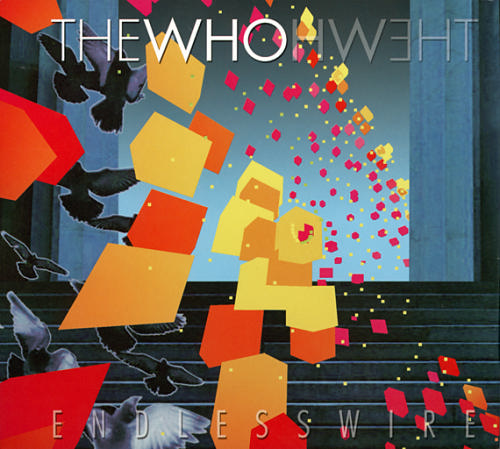 6. The Who - Endless Wire (Universal)
Thought to be their most magnificent album since 1973's Quadrophenia and 1975's The Who By Numbers, Endless Wire marks the end of a 24-year creative drought from Pete Townshend and Roger Daltrey as The Who. Whether or not Endless Wire would have been a more interesting album with just Townshend on acoustic guitar and Daltrey taking a break from his bare-chested bravado is anyone's guess.
*This list is re-printed from the January 2007 issue of Chicago Innerview for use on Getting In Tune. Chris Castaneda is a contributing writer to the magazine and author of this list.
Wednesday, November 01, 2006
Extra! Extra!
The November issue of Chicago Innerview is now available online. I have contributed a feature article on the German group Mouse On Mars. Follow the direct link to read the article:
http://www.chicagoinnerview.com/archives/nov06_mouseonmars.htm
*Expect updates this weekend on Getting In Tune.
http://www.chicagoinnerview.com/archives/nov06_mouseonmars.htm
*Expect updates this weekend on Getting In Tune.
Thursday, October 05, 2006
Jenny Lewis & The Watson Twins @ Vic Theatre (10/4/06)
 Every artist reaches a point of transition, but who knew that for Jenny Lewis it would take singing twins and some acoustic guitars to make that happen? The lead singer of Rilo Kiley returned to Chicago in support of her solo debut Rabbit Fur Coat, showing off how much she’s grown in the seven months since her last performance at Park West.
In March, Lewis was the unproven “solo artist,” taking the stage with her backing band and decked out in an outfit taken straight from Loretta Lynn’s closet. As much as the spotlight was on Lewis, it was really about the collection of songs that shed new light onto a performer known mostly for her sweet pop voice, girl-next-door good looks and acting career as a young girl in the 80s. But Lewis succeeded that night by proving to many in the audience that she was more of a presence with substance than just a vessel for sound.
Those that nearly filled the Vic Theatre were treated to a show that not only raised the bar a bit from Lewis’ previous visit but also showcased new songs that were teasingly flavored with mischief…and Vegas, honky-tonk fun?
 Gone was the Loretta Lynn look that completely covered Lewis at Park West. Instead, Lewis appeared from the shadows in a sleek, black dress, which had many in the audience cheering. It was as if Lewis suddenly became the Audrey Hepburn of rock ‘n’ roll. As her voice carried throughout the theatre, it wasn’t the sensuality that Lewis was displaying that jumped out the most—it was the confidence. “The Big Guns” and “The Charging Sky” stomped with a new found purpose to the road worn songs.
Halfway through the show, Lewis and the Watson twins (Chandra and Leigh) left the stage while the band played on during the standard “Let’s introduce the band” jam. If the elegant black dresses worn by Lewis and the twins weren’t enough, then the Vegas-styled glimmering outfits the ladies re-appeared in certainly shook the roof of the Vic. Lewis now entered her Tina Turner phase. With the crowd roaring, Lewis became a whole other performer as she strutted out some dance moves with the Watson twins and sang with a flirtatious wink in her eye.
New songs, “Fernando,” “Jack Killed Mom,” “Acid Tone” and “Carpetbagger” (possible working titles), gave a glimpse of what might be in the works for Lewis’ follow-up album. The songs were lively in their catchiness, soulful, and took an entirely different road from the country-esque path that Rabbit Fur Coat cruised. The band held an extra sense of excitement as they really let loose with songs still finding their footing on stage. The latest material was enough to inject much-needed life to a show that could have easily become a mirror image of Lewis’ show at Park West in March.
 As the encore opened, Lewis stood alone with an acoustic guitar strapped across her shoulder. The angelic songwriter under the white light stepped to the microphone and almost whispered the opening lines to the title track of Rabbit Fur Coat. Verse after verse, the crowd stood in a hush as they hung on every word Lewis sang, as if listening for clues to solve some mystery.
By the time Lewis and company hit the final note to the Traveling Wilburys’ “Handle With Care,” the house lights came up and fans slowly accepted the disappointment that the show had reached its end. It was another night in the books for Lewis, but the look on her face as she departed the stage was enough to suggest that it’s just the beginning for Lewis…it’s just the beginning.
All Photos By: Chris Castaneda
Sunday, October 01, 2006
Extra! Extra!
The October issue of Chicago Innerview is now available online. I have contributed a special feature piece for the issue, which focuses on entertainment lawyer Jay B. Ross and the issue of digital royalties.
This feature piece is ONLY available in the print version of the magazine. I will scan the article soon and make it available here on Getting In Tune for those who live outside of Chicago.
This feature piece is ONLY available in the print version of the magazine. I will scan the article soon and make it available here on Getting In Tune for those who live outside of Chicago.
Saturday, September 30, 2006
Poi Dog Pondering @ Metro (9/29/06)
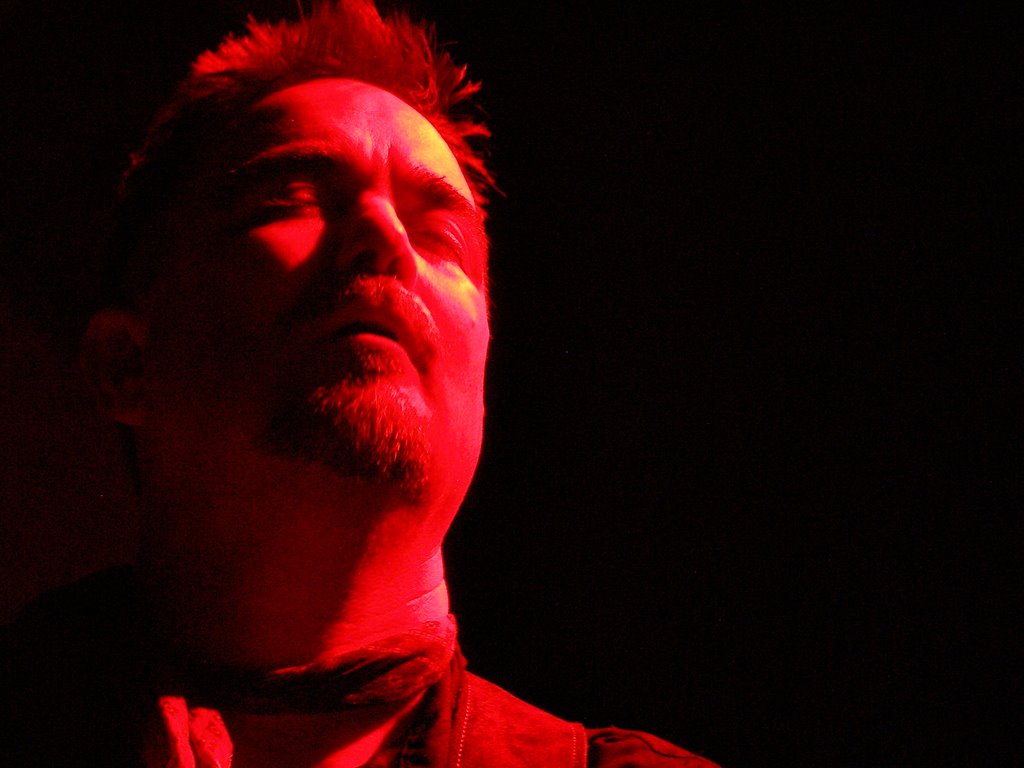 Metro owner Joe Shanahan called the evening a “love fest” as he stood on stage beckoning Poi Dog Pondering to play one more encore, rallying the support of the audience still buzzing from the two hour plus show they just experienced.
For Shanahan to ignore the scheduled show time and demand an extra set, you know Poi Dog Pondering hit one of their grooves that take the band on another musical plane. In close to twenty years, Poi Dog Pondering has made it a habit of putting on performances that not only marvel audiences, but also find a way to go an extra mile to make something special. The band’s loyal fans made it a sold-out affair at Metro on Friday night, packing every inch of the club, leaving enough elbow room for dancing and drinks.
Poi Dog Pondering has been working on a follow-up to their 2003 album In Seed Comes Fruit and received some well-deserved recognition by being chosen to be one of the top acts to represent the Chicago music scene at this summer’s Lollapalooza fest in Grant Park.
In their first major local performance since then, singer Frank Orrall and company were all smiles as they each took to their stage positions. Guitarist Dag Juhlin strapped on his Fender Stratocaster and soon the trippy, water drop opening to “Pomegranate” cast out over the crowd. Orrall’s voice lurked throughout Metro while violinist Susan Voelz served as a beacon of light under the dim blue lighting, her violin strings sounding like some setting sun in the great distance.
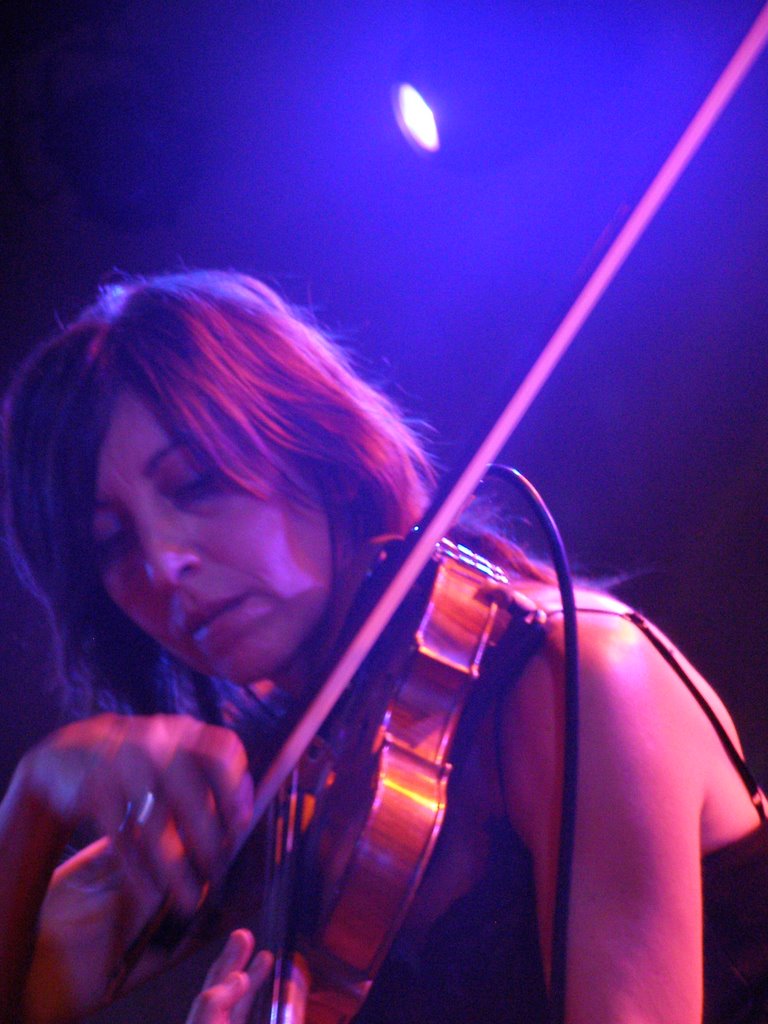 The biggest surprise of the night was the number of new songs the band threw into the set, making up the bulk of the show. There was a sense of liberation to the band’s performance as the night went on. Juhlin would jack hammer his guitar into his amplifier during solos or stand at the edge of the stage, sending his right arm into Townshend-esque windmills. Bassist Ron Hall and current drummer Dan Leali locked gears and gave the band a pulse that intensified with every beat.
Songs like “Sticky” and “Butterfly” were direct in their song structures, and not as orchestrated as previous songs in the band’s backlog. “Candy (Rock Candy)” and “Supertarana” pumped with a brashness that hasn’t really been heard much from the band since perhaps the songs of Volo Volo (1992). “We’re going to start recording on Monday, so, we better get this shit right,” laughed Orrall as the band missed a cue to another new tune. Perhaps the two best Poi Dog Pondering songs in years followed another in the set. “Space Dust” must have come out of listening to plenty of Pink Floyd, a touch of Wilco’s Yankee Hotel Foxtrot and post-Ok Computer era Radiohead because it was not a song the average fan would expect to come out of a band like Poi Dog Pondering, a band that developed its organic, folk pop, soul infused melodies from the ground up. If “Space Dust” took you past the rings of Saturn, then the song that followed—possibly called “Satellite”—took you outside the Milky Way.
The night proved to be a test, not just to those in the crowd who came to hear the usual show stoppers like “Complicated” (like the woman standing next to me who seemed would have rioted if the band didn’t play the song), but to the band. After recycling what has been the general set list for the past 3 years and maintaining a stable band lineup for even longer, it was time for the band members to challenge themselves again and really open a new door.
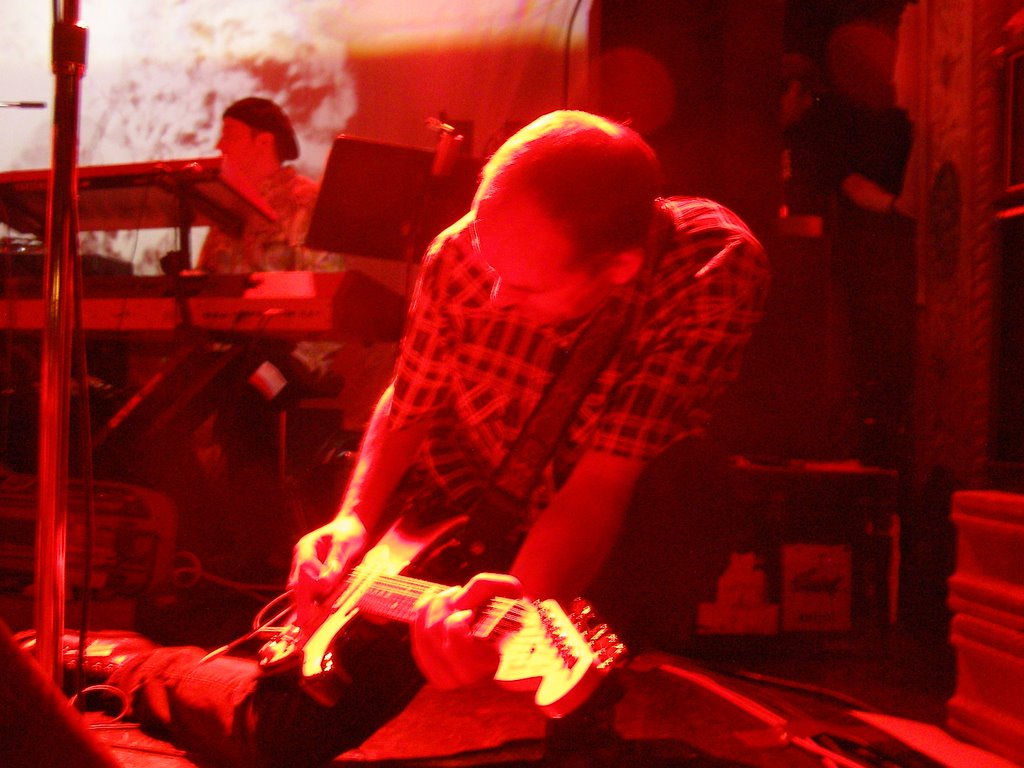 As Orrall, Juhlin, and Volez converged to centerstage to share vocals on the climactic “Bury Me Deep,” there was an energy on stage that hadn’t been felt before, something that felt unfamiliar, yet positive. It was that X-factor, the thing you can’t quite put your finger on but know is there right in your face. Maybe everyone who stayed until the final note faded got a friendly reminder that in this life anything is possible. For Poi Dog Pondering, it was a show that made a statement, that after twenty years the possibilities are still limitless.
All Photos By: Chris Castaneda
Friday, September 01, 2006
Extra! Extra!
The September issue of Chicago Innerview is now available online. This month also marks the 3rd anniversary of the magazine.
I have contributed a write-up on Elf Power and some words for the special wrap up of Lollapalooza 2006.
The latest issue of Chicago Innerview serves as a guide to the Hideout's 10th Anniversary Block Party, which will be celebrating the 25th anniversary of Touch and Go Records. Also check out the Hideout's website for the FINAL schedule of the three day party, along with ticket information.
Happy anniversary to the good people at the Hideout, Touch and Go Records, and Chicago Innerview.
I have contributed a write-up on Elf Power and some words for the special wrap up of Lollapalooza 2006.
The latest issue of Chicago Innerview serves as a guide to the Hideout's 10th Anniversary Block Party, which will be celebrating the 25th anniversary of Touch and Go Records. Also check out the Hideout's website for the FINAL schedule of the three day party, along with ticket information.
Happy anniversary to the good people at the Hideout, Touch and Go Records, and Chicago Innerview.
Tuesday, August 08, 2006
In The Crowd
 Lollapalooza 2006 has wrapped up its 3 day residency in Chicago. It was 3 days of lots of music, lots of people, and lots of walking.
Here are a few choice shots taken throughtout Grant Park.

Guitarist Dag Juhlin of Poi Dog Pondering.

Poi Dog Pondering hits the stage.

The wild rock 'n' roll circus of the Flaming Lips.

Wilco returns home.
All Photos Taken By: Chris Castaneda
Tuesday, August 01, 2006
Extra! Extra!
Time to get back to business!
Getting In Tune has been on hiatus for the past month. For those you have been checking the site for new material, sorry things were quiet around here but I appreciate your interest. Yes, there will be a review of the Radiohead/Auditorium Theatre show from June, as well as my review of Athfest 2006 in Athens, Georgia.
Since it's a brand new month, how about a brand new issue of Chicago Innerview? This month's issue is THE guide to the upcoming Lollapalooza festival, which is taking place here in Chicago from August 4-6. I have contributed write-ups on Poi Dog Pondering, 30 Seconds To Mars, Panic! At The Disco, Catfish Haven, and the Secret Machines.
In addition, Getting In Tune will be strolling the backstages of Lollapalooza as well as bouncing with the crowds throughout Grant Park. A massive report will follow which will include coverage from the fest and late night club shows happening after the fest.
Check back soon!
*On a funny note: The cover of Chicago Innerview uses a photo taken from last year's Lollapalooza. If you happen to grab a copy, you'll spot me wearing the floppy hat in the photo pit looking up at Perry Ferrell.
Getting In Tune has been on hiatus for the past month. For those you have been checking the site for new material, sorry things were quiet around here but I appreciate your interest. Yes, there will be a review of the Radiohead/Auditorium Theatre show from June, as well as my review of Athfest 2006 in Athens, Georgia.
Since it's a brand new month, how about a brand new issue of Chicago Innerview? This month's issue is THE guide to the upcoming Lollapalooza festival, which is taking place here in Chicago from August 4-6. I have contributed write-ups on Poi Dog Pondering, 30 Seconds To Mars, Panic! At The Disco, Catfish Haven, and the Secret Machines.
In addition, Getting In Tune will be strolling the backstages of Lollapalooza as well as bouncing with the crowds throughout Grant Park. A massive report will follow which will include coverage from the fest and late night club shows happening after the fest.
Check back soon!
*On a funny note: The cover of Chicago Innerview uses a photo taken from last year's Lollapalooza. If you happen to grab a copy, you'll spot me wearing the floppy hat in the photo pit looking up at Perry Ferrell.
Saturday, July 01, 2006
Extra! Extra!
The July issue of Chicago Innerview is now available online.
This month's issue serves as a guide to the 2006 Pitchfork Music Festival (July 29-30). I have contributed write-ups on The Futureheads, Glenn Kotche, and the Jeff Parker-Nels Cline Quartet. I have also contributed a feature article on The Futureheads.
Here are direct links to the pages containing these articles (be sure to scroll down to spot my write-up pieces on each page):
The Futureheads (Feature):
http://www.chicagoinnerview.com/archives/jul06_futureheads.htm
The Futureheads (Write-Up):
http://www.chicagoinnerview.com/archives/jul06_previewD.htm
Jeff Parker/Nels Cline Quartet (Write-Up):
http://www.chicagoinnerview.com/archives/jul06_previewF.htm
Glenn Kotche (Write-Up):
http://www.chicagoinnerview.com/archives/jul06_previewI.htm
*Coming soon are late additions to Getting In Tune, which include reviews of Radiohead at the Auditorium Theatre (6/20) and coverage of AthFest in Athens, GA during a recent vacation.
This month's issue serves as a guide to the 2006 Pitchfork Music Festival (July 29-30). I have contributed write-ups on The Futureheads, Glenn Kotche, and the Jeff Parker-Nels Cline Quartet. I have also contributed a feature article on The Futureheads.
Here are direct links to the pages containing these articles (be sure to scroll down to spot my write-up pieces on each page):
The Futureheads (Feature):
http://www.chicagoinnerview.com/archives/jul06_futureheads.htm
The Futureheads (Write-Up):
http://www.chicagoinnerview.com/archives/jul06_previewD.htm
Jeff Parker/Nels Cline Quartet (Write-Up):
http://www.chicagoinnerview.com/archives/jul06_previewF.htm
Glenn Kotche (Write-Up):
http://www.chicagoinnerview.com/archives/jul06_previewI.htm
*Coming soon are late additions to Getting In Tune, which include reviews of Radiohead at the Auditorium Theatre (6/20) and coverage of AthFest in Athens, GA during a recent vacation.
Saturday, June 03, 2006
In The Crowd
 Before embarking on a summer tour, John Stirratt and Pat Sansone took time away from Wilco to perform as their band Autumn Defense for a Friday night at Schubas.
Along with drummer Greg Wiz, the trio soothed the packed audience with their '70s folk bliss and pitch perfect harmonies.
The trio also filled their hour-long set with new material from their upcoming third album, which is set for release in October.
Even more buzz than the band's next album was the news about Stirratt adding the title of "newlywed" next to "singer/songwriter/bassist/guitarist".
Photo Taken At Schubas (6/2/2006) By Chris Castaneda
Friday, June 02, 2006
Extra! Extra!
The June issue of Chicago Innerview is now available online.
I have contributed write-ups on the Stills and We Are Scientists. I have also contributed a feature piece on the Stills. The core of the issue focuses on the upcoming Intonation Fest (June 24 & 25).
Here are direct links to the pages containing these articles:
The Stills (Feature):
http://www.chicagoinnerview.com/archives/jun06_stills.htm
The Stills (Write-Up):
http://www.chicagoinnerview.com/archives/jun06_intonationB.htm
We Are Scientists (Write-Up):
http://www.chicagoinnerview.com/archives/jun06_previewB.htm
I have contributed write-ups on the Stills and We Are Scientists. I have also contributed a feature piece on the Stills. The core of the issue focuses on the upcoming Intonation Fest (June 24 & 25).
Here are direct links to the pages containing these articles:
The Stills (Feature):
http://www.chicagoinnerview.com/archives/jun06_stills.htm
The Stills (Write-Up):
http://www.chicagoinnerview.com/archives/jun06_intonationB.htm
We Are Scientists (Write-Up):
http://www.chicagoinnerview.com/archives/jun06_previewB.htm
Thursday, May 18, 2006
Pearl Jam @ United Center (5/17/2006)
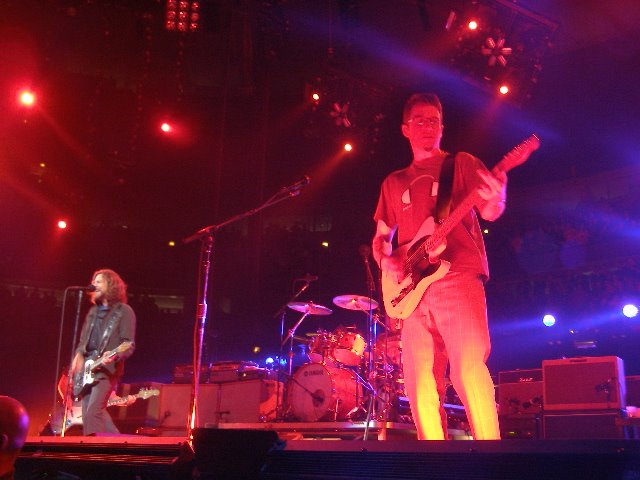 Allow this writer to speak from the first person for this particular review…
I was just ten years old when Pearl Jam’s first album Ten was released. Up to that point music had always been a part of my life but it hadn’t yet become my life. When Pearl Jam began its rise as one of the biggest rock bands in the world I began to listen more closely…but I kept missing the shows. I had my chances to see Pearl Jam in 1994 at the old Chicago Stadium (tickets became available at the last minute but I had no ride) and then the following year at Soldier Field (the same day as a family BBQ). It wasn’t until the 1998 show at the United Center—the sports arena that replaced Chicago Stadium—that I was able to finally see the band in concert.
Pearl Jam’s back-to-back nights at the United Center (5/16 & 5/17) marked the first time since 1994 that the band extended its stay in Chicago. The mini-residency in Chicago must have felt like being back in Seattle for the band. Grey skies, on-and-off rain, hail, brisk winds and very little sun blanketed Chicago. It was just the seventh show on the first leg of the band’s world tour in support of its latest self-titled album Pearl Jam (J Records), an album that debuted at #2 on the Billboard charts.
It would seem a new page has been turned in Pearl Jam’s career. The band split ways with Epic Records after having spent over 15 years there and supplying multi-platinum albums for the label. Instead of re-signing with Epic, the Seattle-based quintet opted for J Records, a subsidiary label under the RCA Music Group umbrella. Industry giant Clive Davis, founder of Arista Records, created the relatively young J Records in 2000. The 74-year-old Davis has often been criticized for having less of a music ear and more of a business ear. Simply put, he’s made a career of discovering the blandest music that could be easily packaged and processed for the consumer. He was greatly responsible for Carlos Santana’s comeback album Supernatural (1999). Had he been in the studio with George Martin and the Beatles in 1966 while making Revolver, he probably would have told the band to be less experimental with their sound and record songs that were more like “I Want To Hold Your Hand.” So, why would Pearl Jam associate itself with a man more interested in sculpting the careers of American Idol winners? Business.
 It wasn’t a question if the band’s two United Center shows would sell out, but how fast they might sell. Clive Davis certainly doesn’t have to convince people to come out to a Pearl Jam show, but he might have had a hand in securing a deal with Ticketmaster to provide the option to purchase the new album along with your concert ticket. Hmmm? In the current issue of Chicago Innerview, I wrote a concert write-up on the band’s Chicago dates. Just as people have a right to question their elected officials, fans have every right to question the artist they have invested time and money in. My $15.99 may not have provided a roof over Eddie Vedder’s head or a new Gibson SG double-neck guitar to satisfy the Jimmy Page fan within Mike McCready but it definitely hasn’t hurt the end of the year figures. I did something I never did before, either among friends or in print—I criticized the band.
The point I tried to make was that I felt Pearl Jam had gone as far as the guitar-bass-drums formula could take it and that change was needed. “It’s easy to meet expectations when it comes to stadium rock,” I said in the article. “The question is whether or not Pearl Jam has unknowingly slipped into the corner of aging rock band fighting the keep the fire alive.”
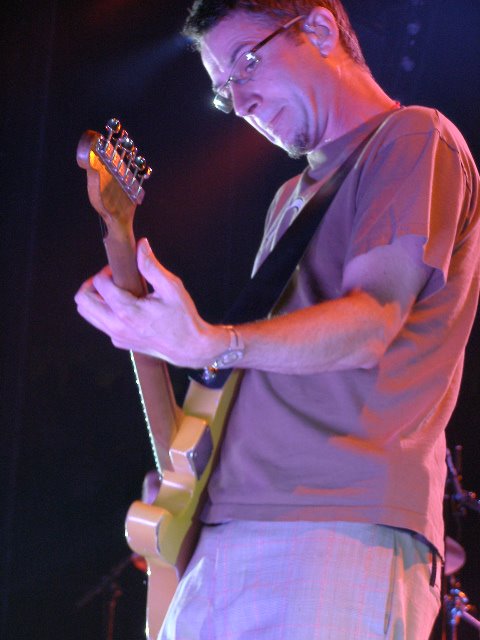 The double-album Live At Benaroya Hall was a breath of fresh air. Released in 2004, the album captures the band’s mostly all-acoustic show on October 22, 2003 at a Seattle symphony hall. Pearl Jam toyed with the idea of incorporating an acoustic set into its shows during the 2003 tour for Riot Act. One such show took place in Mansfield, MA on July 11, 2003 when the band made the first half of the show a 12-song acoustic set. Couldn’t the band take a break from the arenas and pick up the acoustic guitars instead of giving fans the rock show they’ve come to expect from the band? Wouldn’t the band performing acoustically make for a more interesting show at this point in its career? Well, I guess not.
So, when I walked into the United Center for Wednesday night’s performance, I was a little nervous. I found the new album, Pearl Jam, to be musically lazy after I purchased it weeks prior to the concert. From the band’s hit single “World Wide Suicide” to “Gone,” there’s not one song that doesn’t feel as if it were written during sleep. Some critics declared the album a return to form, harking back to the days of Ten. But to a band that has been more focused on moving forward than recycling itself, wouldn’t these reviews be cause for concern?
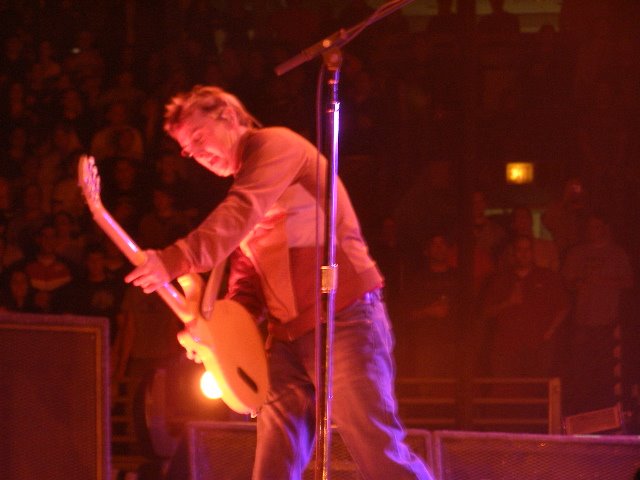
I stood in the photo pit has the band ripped into 3 straight songs off the new album (“Severed Hand,” “World Wide Suicide,” “Life Wasted”). Guitarist Stone Gossard showed some teeth as he attacked the riffs behind “Life Wasted.” The whole band stormed the audience with a level of force it lacked the last time it was under the United Center roof in 2003. Then as I moved to my seat I watched a band that clearly knew it was going to have an amazing night.
 “So, this is Chicago. Night Two,” said Vedder to the roaring audience. “This was the night we were looking forward to.”
During “1/2 Full,” Vedder took his guitar and transformed it into a spotlight as he angled the guitar to reflect the stage lights onto the crowd. Along with “I Am Mine,” Pearl Jam gave these two Riot Act songs new life, beefed up with a crushing sound. Although the energy was there for new songs like “Inside Job” and “Marker In The Sand,” what came across was how these songs ranked slightly below their predecessors. If anything, the latest material that Pearl Jam brought to the stage worked better there than on record; it’s the old “Better live than on the album” criticism. The pace never deteriorated, but the crowd’s allegiance would sort of pause until the next song. It was almost like the crowd was politely saying to the new material, “Yeah, good song, guys. By any chance is ‘Brain Of J’ next?”
Saying it was a transcendent night might be stretching it a bit, but Pearl Jam made me eat my words with the show they put on. As Vedder picked the opening notes to “Betterman,” the crowd sang in unison the song’s intro, the verse and chorus filling up every corner of the United Center. I stood there and smiled because I realized how special little moments like that are at a concert of this size.
As the first encore began, Pearl Jam delivered a couple of gems like the haunting “Footsteps” and possibly the best version of “Alive” I’ve ever heard the band perform. The outro to “Alive” has often fueled some fantastic jams by the band with McCready test-driving new guitar solos. But the outro became the song’s climax and the crowd recognized the moment. On every beat drummer Matt Cameron slammed on his snare drum, the fans thrust their fists as one while shouting “Yeah!” The arena lights would brightly flash on cue with the crowd’s actions. It was a sea of fists rising to the air. Vedder, who was facing the back of the stage, turned and laughed at what had been going on behind him. Suddenly the showman became the fan as he stepped up to his microphone to follow the crowd’s lead by throwing his fist into the air.
 Surprises weren’t limited to the setlist. Fans were treated to a fun rendition of the Wayne Cochran song “Last Kiss,” which the band made popular as a single for the benefit album No Boundaries (1999). Vedder managed to sneak his way to the soundboard area near the back of the arena and sing from the station. The delay between his voice and the band back on the stage was noticeable, but they managed to keep the song together. “We like to play this one for special occasions,” said Vedder before the band unveiled the Mother Love Bone song “Crown Of Thorns,” a song Vedder admitted Pearl Jam had never performed at previous shows in Chicago.
In what have become standard closing numbers to a Pearl Jam show, Neil Young’s “Rockin’ In The Free World” and “Yellow Ledbetter” put the final touches on a night that lived up to the band’s stage reputation and set me straight about the band trying to keep the musical fire burning. Vedder, the Evanston native, would still lose himself in his apelike go-go dancing; McCready and Gossard are still a formidable guitar duo; and Cameron and bassist Jeff Ament maintain their rhythm section dominance. Keyboardist Boom Kasper had a more limited role this time around than on the 2003 tour, but his contributions never went unnoticed.
So, where was I wrong?
After Wednesday’s performance, I’m left to wonder if Pearl Jam’s brilliance on stage is reason enough for the band to go on being an unstoppable monster rock band or if I’m being selfish in hoping that one of my favorite bands takes the chance to do something different with its show. Can a Pearl Jam show ever become typical?
I’ll still stand by my opinion about Pearl Jam, but I have to appreciate the fact that after all these years Pearl Jam can still walk onto a stage and release a sound that won’t ever be replicated again.
All Photos By: Chris Castaneda
Wednesday, May 17, 2006
Play Or Nay
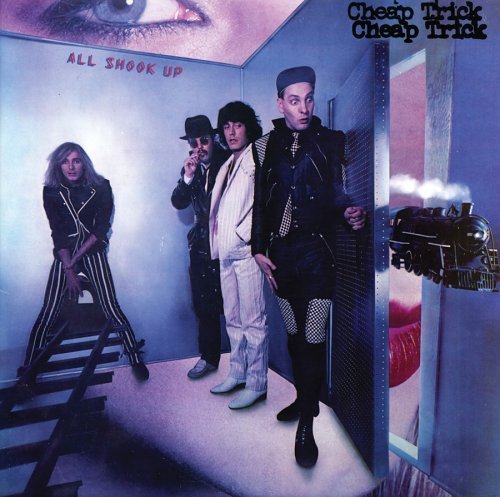
Cheap Trick - All Shook Up (Epic/Legacy)
Between 1977 and 1979, the pride of Rockford, Illinois known as Cheap Trick released five albums: the band’s self-titled debut Cheap Trick (1977), In Color (1977), Heaven Tonight (1978), the monumental live album At Budokan (1979), and Dream Police (1979). An album run such as this is rarely ever seen in today’s music world, especially if the albums are artistically solid. The closest to this might be R.E.M. between 1982 and 1988 with seven consecutive album releases.
But for as many hits Cheap Trick has achieved over the course of thirty years they have also experienced its fair share of misses, both in the music business and on record. During the '80s and '90s, the band barely saw success. Of the eight albums they released during that period, only twice did the band score commercially with gold (500,000 copies) and platinum sales (1,000,000 copies); the band also performed the instrumental track “Mighty Wings” for the movie Top Gun. What truly suffered the most was the band’s creative juices, showing an inconsistency of artistic edge buried in a sea of mediocrity. But if there had to be a choice of which album in Cheap Trick’s catalog took the most chances musically and pushed the band’s songwriting abilities to the peak, it would have to be the band’s fifth album, 1980’s All Shook Up.
Up to this point, Cheap Trick had only worked with two producers: Jack Douglas and Tom Werman. Douglas, known for his work with Aerosmith, tried to capture Cheap Trick’s road seasoned live sound while bringing out the band’s Beatle-esque pop sensibilities on the group’s 1977 debut. After Douglas, Epic Records assigned producer Tom Werman to the band. Werman sought to polish the band for radio play while sacrificing the band’s raw power. There always seemed to be a division created by Werman behind the producer’s chair: Cheap Trick as the studio band and Cheap Trick as the live band. Then came producer George Martin and engineer Geoff Emerick into the picture.
It was almost fate that the famed producer of every Beatles album should partner up with Cheap Trick. No other rock band at that time in the late ‘70s harnessed the melodic colorfulness and pop arrangements of the Beatles the way Cheap Trick did. Martin and Emerick (engineer on Sgt. Pepper’s Lonely Hearts Club Band) helped lead Cheap Trick to their full artistic potential; guitarist and principle songwriter Rick Nielsen had the space to really flex his muscle as a songsmith; Robin Zander continued his climb as one of the most identifiable voices in rock music, and the rhythm section of bassist Tom Petersson and drummer Bun E. Carlos was superb.
Opening with “Stop This Game,” Cheap Trick pays homage to The Beatles with the sound of a piano drone fading in as the song builds, the same sort of drone The Beatles used to fade out with on “A Day In The Life” from Sgt. Pepper’s Lonely Hearts Club Band. Zander’s voice carries above the drone before stepping aside for slicing violin strings and Carlos’ sharp hits on the drums. Petersson’s bass parts flow as Martin gives his bass some color reminiscent of Paul McCartney’s work on The Beatles’ single “Rain.” Nielsen plays it simple with little flash as he crunches along on his guitar. Going one step further is the sinister “Just Got Back.” Carlos takes center stage as he is surrounded by 24 tracks of percussion parts. It’s a drummer friendly song that John Bonham and Keith Moon would have signed up to play on. If ever Nielsen wrote a song that recaptures the “they’re-coming-to-get-me” attitude of “Dream Police,” then “Just Got Back” would be the song. “Baby Loves To Rock” borrows a bit from Fats Domino’s “Ain’t That A Shame” but with the maximum R&B muscle of The Who.
An aspect of the band that often is under-appreciated is Cheap Trick’s way with arrangements. Without the right arrangement for a song, then details like a chorus or verse simply won’t work. In this sense, Martin and Cheap Trick made a perfect pair. On “Can’t Stop It But I’m Gonna Try,” Zander howls and seethes with the venom of a lover fighting obsession. Nielsen hits his mark with “World’s Greatest Lover.” Zander adopts his best John Lennon voice and delivers a fantastic performance, while Nielsen crafts one of the finest guitar solos of his career (some portions later pop up in “Mighty Wings”).
“High Priest Of Rhythmic Noise” would contend to be one of the earliest examples of industrial rock. The distorted effects over the lead vocals create a robotic vibe to the song that any Atari fan at the time would have appreciated. Nielsen credits the death of AC/DC singer Bon Scott as the inspiration to “Love Comes A-Tumblin’ Down.” The song is a fitting tribute to a band and a singer that Cheap Trick often applauded. Nielsen’s fiery solo is a nice nod to schoolboy-dressed guitarist Angus Young. “I Love You Honey But I Hate Your Friends” combines the best of Lynrd Skynrd and The Faces. The song’s title and chorus plays on Nielsen’s wit to always add a twist inside a song. The band bashes out the tune as if they were back playing at some dive bar in the Midwest.
Cheap Trick literally uses every trick in the book on the frantic riff fest “Go For The Throat (Use Your Own Imagination).” According to Nielsen in the October 1996 issue of Guitar World, “That song would have been tricky even for Rush to execute properly!” Here was another example where Martin’s experience benefited the band. Said Nielsen in the same interview, “George (Martin) really pushed us to go the extra mile in our songwriting, arranging and playing. For example, we never would have attempted a song as complex as ‘Go For The Throat’ without his encouragement.”
All Shook Up closes not with a swift knockout punch but with a laugh. “Who D’King” is the band’s “Yellow Submarine,” a ridiculously good time where Cheap Trick busts out into a conga line. The song adds some tongue-in-cheek flavor to an album hell bent on being the best rock album it can be, and without a little nonsense thrown in it wouldn’t live up to what a Cheap Trick album is all about.
The fact the band managed to keep it together while bassist Tom Petersson had his eye on leaving Cheap Trick (which he did following the album’s completion) is a testament to the band’s survival instincts. Although the band would reach commercial highs with 1982’s One On One and 1988’s Lap Of Luxury, All Shook Up remains to be the last Cheap Trick album that was consistent with its artistic mission.
Monday, May 15, 2006
Secret Machines @ Metro (5/13/2006)
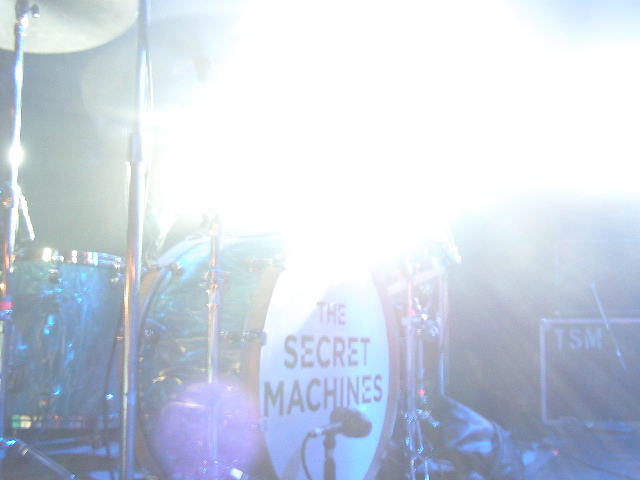 For many standing in line outside Metro at 10:30pm, their Saturday night really hadn’t begun. While others headed towards the local bars up and down N. Clark St. these people waited in the unseasonably chilly May weather to see one of rock music’s up-and-coming talents known as the Secret Machines.
The New York-based band arrived in Chicago supporting its new album Ten Silver Drops (Reprise), an album that explores the band’s melodic touch and steps back from the bombastic wall of sound heard on its acclaimed 2004 debut Now Here Is Nowhere (Reprise). On this sophomore attempt by the Secret Machines, Ten Silver Drops pushes the band’s songwriting to the forefront, an aspect that has developed nicely, merging the traditional pop song mentality, the trip factor of psychedelic rock, and the hard rock assault.
By 12:06am, the three-piece band—consisting of Josh Garza, and brothers Brandon and Ben Curtis—appeared out of the darkness and headed towards their respective instruments. There was something mythical about the band as their silhouettes stood on stage. Filling the air were these swirling organ notes, bunched together, like musical tidal waves crashing into one another and taking shape as the opening song “Alone, Jealous and Stoned.” Brandon Curtis’ hushed voice swept the crowd, while the storming presence of drummer Josh Garza added weight to his performance behind the keyboard. And in the middle of the two was guitarist Ben Curtis meticulously picking his notes, working back and forth from his many effects panels. The great care given to the song’s details was unmistakable.
The song gave way to a surge of synthesized guitar notes building up into “The Road Leads Where It’s Led.” The transition was like floating in space only to be rocked by a supernova. The sight of Garza’s bass drum steadily beating looked as if it would burst at any moment. The song would rise as Brandon and Ben Curtis joined together for the refrain. As if possessed by the words, the brothers’ voices led the anthem of “Blowing all the other kids away” with the crowd.
 Few words were said by any member of the band, either among themselves or to the crowd. To many whom have watched the band live, they know the Secret Machines are not the most talkative band with a crowd. For some, this may come off as being distant, but to others that see past this minor detail of showmanship it is the band’s collective performance that matters the most. In this regard, the Secret Machines were flat out flawless.
The band’s set ran for an hour and a half, but it was still enough time for the band to live up to its reputation as a powerful force on stage. Songs such as “Pharaoh’s Daughter” and “Daddy’s In The Doldrums” provided all the pyschedelia one could want. Pulled from the 2005 EP for “The Road Leads Where It’s Led,” the Secret Machines almost demolished the Metro stage with by far its deadliest up-tempo song called “Better Bring Your Friends.” How that song didn’t make the cut for either album is anyone’s guess. The warm melodies that filled “Lightning Blue Eyes” from Ten Silver Drops exemplified the band’s strengthened sense of injecting pop elements into its mammoth sound.
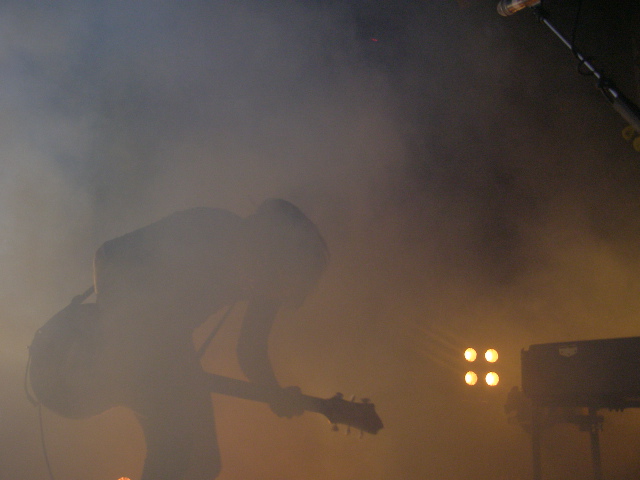 After a riveting performance of the band’s most notable single, “Nowhere Again,” the band took a break that probably lasted no more than five minutes before returning for an encore. As if really wanting to go for the crowd’s throat, the Secret Machines saved its best punches for last. The uninhibited performances of “Sad And Lonely” and “First Wave Intact” unlocked every facet of the trio’s ferocity. Garza reduced his drumsticks into tinder, probably to later serve as candles to celebrate his birthday. Ben Curtis was a sonic wizard with his guitar, and his physicality on stage really channeled the spirit of the band’s music. Then there was singer Brandon Curtis, a voice deserving to be recognized. His vocals would creep up behind you like some mysterious stalker or stand tall with conviction.
Without the music, the night would have been merely filled with an impressive light show and a smoke machine that emitted a maple syrup scent in the air. Any doubts that band could not live up to the expectations created by Now Here Is Nowhere were eradicated. The night belonged to the Secret Machines.
All Photos By: Chris Castaneda
Tuesday, May 09, 2006
Office @ Schubas (5/2 & 5/8/2006)
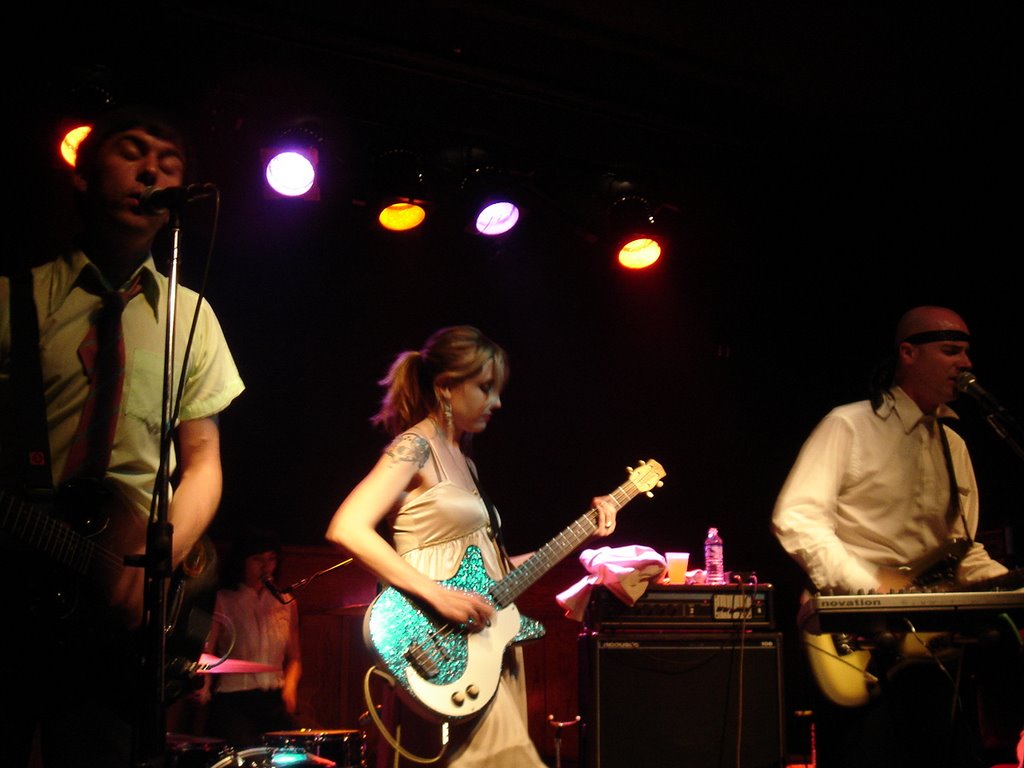 Once in a while, you might catch a band performing at the local club that you haven’t seen before or know much about, and you’ll leave the show on some incredible high like you’ve just solved the meaning of life. You depart the club so impressed with what you witnessed that you begin to think, “That’s a band that deserves a fifteen year career!” For the Chicago-based band Office, this scenario would ring loudly as true.
On May 2, the four-piece band took up residency at Schubas, which will house the band on every Monday for the rest of the month as part of the club’s “Practice Space” series. Comprised of Scott Masson (lead singer/guitar), Alissa Noonan (bass), Erica Corniel (drums/vocals), and Tom Smith (guitar/vocals), Office is progress in motion.
Listening to the band on stage a number of possible influences come to mind. Elements of Cheap Trick, The Church, New Order, Talking Heads, Sonic Youth, Echo and The Bunnymen, and R.E.M. all seem to swim in this perfect harmony that comes across as being more a fresh spin than being flat out derivative. Guitarists Masson and Smith at times channel the sonic touches of Lee Ranaldo (Sonic Youth) and Peter Buck (R.E.M.). Bassist Alissa Noonan and drummer Erica Corniel lock gears and provide Office with a steady, pulsing dance groove underneath the guitar waves.
The band’s image on stage is just as engaging as the music. In this department, they borrow a page out of Cheap Trick’s book that even guitarist Rick Nielsen would tip his baseball cap to. Wearing business clothes the four members may look like extras in the movie Office Space, but the look plays as a fun novelty to the overall presentation. Office delivers a full package made up of deliciously arranged pop songs and lively imagery with a sense of humor (the band also incorporates one or two women on stage to act as secretaries complete with typewriters).
Building on the buzz of its self-released album Q&A and a successful spot at this year’s South By Southwest Music Conference in Austin, Texas, Office is winning over audiences, one show at a time…you know…the old school way. There’s no hip music video to show on MTV’s Subterranean to get the word out there about the band nor is there some major record label putting its money behind Office to succeed on a grand mainstream level. This is a grassroots band that was conceptualized in 2000 by Masson while studying abroad in London.
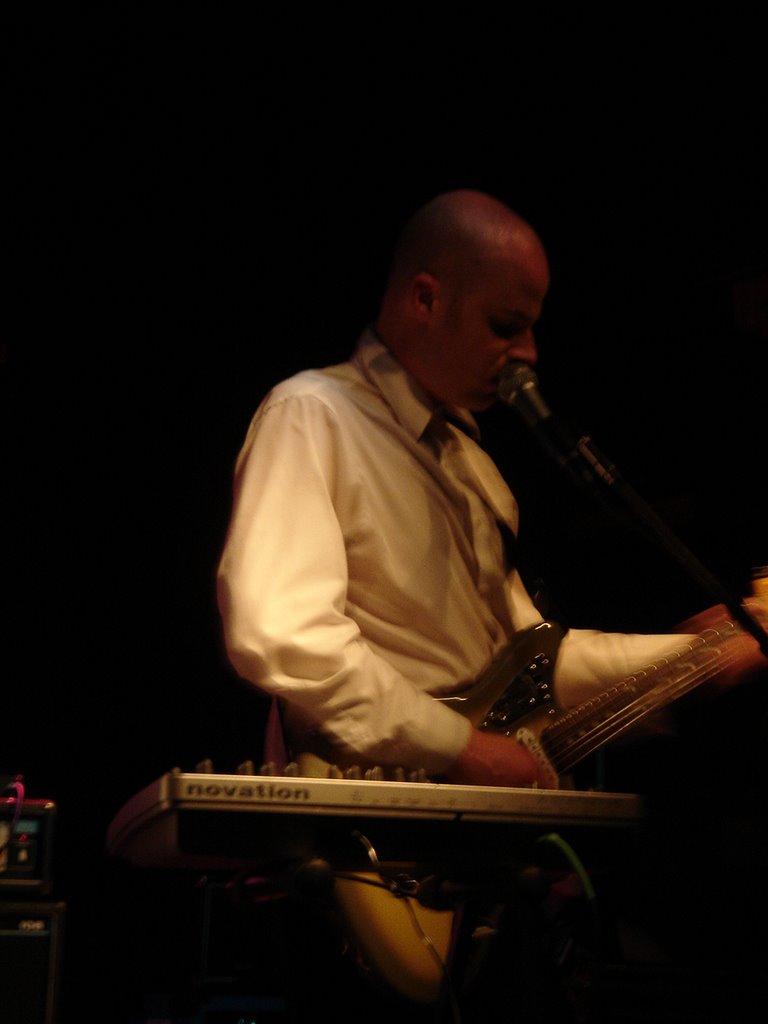 Designing art sculptures inspired by the typical business environment of the office, Masson took the office theme and translated it into music. The result was an album recorded by Masson called Office. What followed a year later was The Ice Tea Boys and the Lemonade Girls, which Masson recorded with friends in Chicago as a full band effort. By 2005, Office became a reality.
The band’s first night at Schubas was a tease. Although the show was solid from start to finish, there was a hovering feeling that Office had something else up its sleeve. Sure enough, the following week the band stepped up even higher, playing with boosted confidence. The look in their eyes was that of a band thirsty to put on a great show. The excitement was there from the beginning as concertgoers directly in front of the stage broke out in dance. Once again working from material off of Q&A, songs like “Oh My” and “Wound Up” had hips shaking along with every beat. Dance partners locked hands for a friendly sway to the Chicago love tale on the CTA Blue Line train called “Until 6pm.” The packed room responded not only with their approving cheers but also with their energy, fueling Office throughout the show.
Masson could be as sweet as he could be menacing behind the microphone, occasionally breaking away and entering these robotic convulsions. Noonan would shyly avoid eye contact with the crowd, either focusing on her play or staring off at her surroundings. But she would offer assurances that she was in fact having a good time by smiling to audience praise directed at her or by dancing along to the music she and her bandmates were performing.
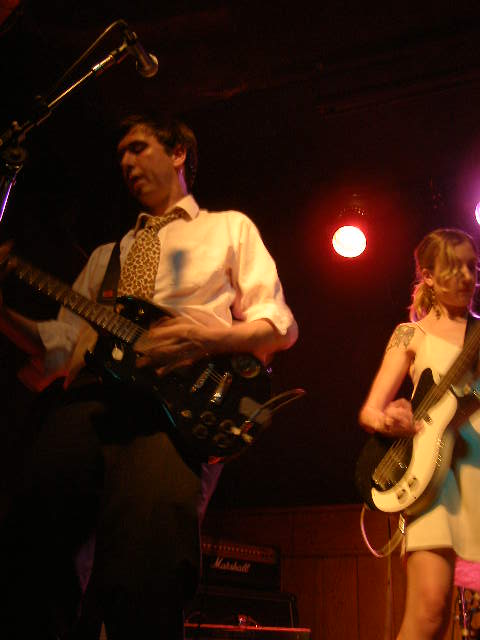 Smith was the type of guitarist that you want to seek out after the show to have a couple laughs or, if you happen to play guitar, would want to join him on stage and play cover songs of The Who and The Cars. The smallest member of the band happens to also be the biggest member as the band’s drummer. Corniel goes by the book on the drums but she’s no pushover. If your head became her snare drum, she would beat it in pretty damn good.
All these characteristics together make up a band that you wouldn’t want to take your eyes off of or miss a single note. Office will complete its Schubas residency on May 22. Plans are also being finalized for the band to appear at this year’s Lollapalooza, a festival already packed with some of the best representatives of Chicago’s diverse music scene like Wilco, Kanye West, Common, Poi Dog Pondering, The M’s, Cameron McGill, and The Redwalls.
For more information on Office, check out the band's website: http://www.reachoffice.com
All Photos By: Chris Castaneda
(1st & 2nd Photos Taken 5/8 - 3rd Photo Taken 5/2)
Monday, May 01, 2006
Extra! Extra!
The May issue of Chicago Innerview is now available online.
I have contributed a write-up on Pearl Jam. Here is a direct link to the page:
http://www.chicagoinnerview.com/archives/may06_previewC.htm
Scroll down the page to find the write-up.
I have contributed a write-up on Pearl Jam. Here is a direct link to the page:
http://www.chicagoinnerview.com/archives/may06_previewC.htm
Scroll down the page to find the write-up.
Friday, April 21, 2006
The Sounds @ Metro (4/20/2006)
 Attitude and swagger are two ingredients to a good rock ‘n’ roll band. Relying on just those two elements isn’t enough to survive on unless there are engaging songs to back up the talk.
The Sounds made their Chicago return for an all ages show at Metro to the tune of Journey’s ‘70s hit “Don’t Stop Believing.” For better or for worse, the song has a rejuvenated life in Chicago since being associated with the Chicago White Sox and their run for baseball’s World Series title last year. Whoever made the decision to use the song as the band’s introduction should have considered the fact that just a few steps south of Metro is Wrigley Field—the home of the Chicago Cubs. You can give the Swedish band some credit for trying to tap into the city’s sports scene; they certainly aim to please.
To the all ages crowd that was squeezing and elbowing to get a little closer to the stage, it didn’t matter if it were Journey or the 1985 Chicago Bears performing the “Super Bowl Shuffle” over the club speakers; they came to experience the rock ‘n’ roll they’ve come to accept from the Sounds.
The 5-piece band ripped through a set that lasted just under an hour and a half. Every note played and every move made by the band was simply eaten up by the crowd. Even the banter of lead singer Maja Ivarsson worked the crowd up; she must have gotten equal applause for the number of times she snarled “Fuck” to the crowd as she did singing. She was a fitting image of the stereotypical female Swedish goddess to every man and woman inside Metro. She combined the glamour and toughness of Blondie’s Deborah Harry with the prowling stage presence of the Rolling Stones’ Mick Jagger.
The band’s creative growth may not have taken a massive leap forward between their debut Living In America (2003) and their latest Dying to Say This to You, but they have become better at fusing the raw power of punk and pop chorus hooks with grinding dance grooves on stage; that alone is one of their best musical strengths. In that regard, the Sounds were on top of their game at Metro. New songs like "Queen of Apology" and "24 Hours"
 opened the night with furious enthusiasm. Ivarsson showed no fear as she dove into the crowd during “Living In America.” The band kept the show’s pace on high with each song and gave no indication of slowing down. This was evident when the band performed “Night After Night” from Dying to Say This to You. On record, the song appears as two versions: the first as a slow, piano driven take and the other as an up-tempo hidden bonus track. The band opted to perform the “rock” version of the song instead. Proving there was still plenty of kick to their older songs, the Sounds shook up matters even more with vibrant renditions of “Seven Days A Week” and “Hope You’re Happy Now.”
During the show’s encore, the Sounds reached their peak at just the right time. With a three-song punch of “Dance With Me,” “Fire,” and “Ego,” the band delivered the goods and a set designed to keep the body moving. The Sounds might be a one trick pony (god only knows rock music today has plenty of those types of bands), but it’s the band’s persistent desire to maintain a sense of fun for themselves and their music that deserves applause.
What was perhaps the best moment of the night didn’t occur during the show but afterwards. As the crowd left Metro, a family of four huddled off to the side of the dance floor near the back, waiting for their chance to merge with the traffic of people. The parents held their young children close to them, their kids appearing to be between the ages of 10 and 12. All four had looks of shock and confusion. Who were these men with eyeliner and spiked hair? Why were these teenage girls—wearing more make-up than a Las Vegas showgirl—trying to squeeze out cleavage that wasn’t there yet? Was this an all ages concert or some pubescent orgy?
To the Sounds, they would call it a good night.
All Photos By: Chris Castaneda
Thursday, April 20, 2006
Death Cab For Cutie & Franz Ferdinand @ Aragon Ballroom (4/19/2006)
 The Aragon Ballroom may not be considered the best sounding venue in all of Chicago, but it certainly has a long history of musical legends that have performed under the painted starlit sky ceiling. Bands like the Rolling Stones, Bob Dylan, and R.E.M. have all taken on the bass boomy ballroom and survived to see another day.
On Wednesday night, Death Cab For Cutie and Franz Ferdinand brought their co-headling tour to the Aragon for a sold-out all ages show. The initial news of the two bands touring together created a lot of buzz. The tour presented two bands on the rise. In Franz Ferdinand, you had a band out of Glasgow, Scotland, that stormed the world with its 2004 self-titled debut album and pile driving single “Take Me Out.” In Death Cab For Cutie, you had a band from the indie rock circuit of the late ‘90s that was finally having the spotlight come to them on their own terms.
For Death Cab For Cutie and lead singer Benjamin Gibbard, the band from Bellingham, Washington, was capping off a sentimental day in Chicago. Earlier in the afternoon at Schubas, an intimate sized club with a playing room fit for about 150 people (a far cry from the 4,500 capacity Aragon), the band performed for the “Live From Studio X” series sponsored by local radio giant WXRT. It was a chance for Death Cab For Cutie to revisit the stage where they first made their Chicago debut almost six years ago.
“I wish we could play longer, but that curfew is a bitch,” said Gibbard to the audience before the band’s encore performance at the Aragon. The issue of time was one of the drawbacks from a co-headlining show like this. Both bands had just over an hour to put on their best. In some ways, it worked out perfectly for Franz Ferdinand and the tempo of its show. The Scottish four-piece geared up their North American tour behind their second album You Could Have It So Much Better (2005) at the Aragon this past September and played for the same amount of time they were scheduled to have on Wednesday night: one hour. But for two bands that genuinely seem to respect and enjoy each other’s music, it was enough time to have some fun.
 Franz Ferdinand proved that although it wasn’t a typical Friday night people could still work up a sweat to the right beats and rhythms any day of the week, even at 7:30pm on Hump Day. After the frantic opener “This Boy,” the band laid down the bricks with a raucous performance of “Do You Want To.”
Franz Ferdinand was brimming with confidence. Singer/guitarist Alex Kapranos may have been the eye candy, flashing winks and coy smiles to the crowd, but it was lead guitarist Nick McCarthy who pushed the musicality of the band to its peak, jerking each note and chord for all they had. Songs like “Walk Away” and “Eleanor Put Your Boots On” provided smooth transitions from the raw, high-speed, dance grooves to showcase the depth of the band’s songwriting and ability to slow matters down. But when Franz Ferdinand jumped back into the fray, there was a sense that the race was coming to a close. “Take Me Out” got the dance floor bouncing, arms began to wave in unison during “The Fallen,” and, finally, the band sprinted across the finish line with the closer “This Fire.”
It was night and day between the end of Franz Ferdinand’s set and the start of Death Cab For Cutie’s set. The stage was barely visible, almost covered in a blanket of low blue lighting, as Gibbard took to the piano and guitarist Christopher Walla picked out guitar notes that echoed throughout the ballroom like distress calls for the band’s opening tune “Passenger Seat.” Although the band’s set took a time detour from the types of shows it normally performs as a main headliner, what remained consistent with this set was the band’s touch as musical painters with sounds and words, splashing songs like “The New Year” and “Why You’d Want To Live Here” with purpose onto a larger canvas.
The crowd’s clamor for “Crooked Teeth” and “Soul Meets Body” dispelled the criticism the band faced with its major label debut Plans (2005), as if the band’s songwriting capabilities would suddenly turn into hollow pop songs because of Atlantic Records. But for all the textures and colors the band crafted throughout its set, it was Gibbard who elevated the show to another realm with a solo acoustic performance of “I Will Follow You Into The Dark.”
The song’s theme of accepting mortality and shedding the fear that comes along with the idea of death created a hush in the Aragon. Gibbard stood stoically in the light with his acoustic guitar as his lips pressed against the microphone with the lines, “Love of mine, someday you will die/But I’ll be close behind and I’ll follow into the dark.” The voices in the shadows joined with Gibbard’s as each line was sung; it was a testament to Death Cab For Cutie’s success of staying its own course as songsmiths and not compromising to gain cheap popularity.
After the encore finale, “Transatlanticism,” Gibbard said to the roaring audience, “See ya at Lollapalooza. We’re playing with Beck. It’s going to be ultimate.” Fans exiting the Aragon must have started their countdown to August when the 3-day festival takes over Chicago’s Grant Park. For all their differences, artistically and stylistically, Death Cab For Cutie and Franz Ferdinand turned a brief evening into an evening filled with moments that were as soul searching as they were exhilarating. Variety was indeed a spice to a Wednesday night.
All Photos By: Chris Castaneda
Monday, April 17, 2006
Yeah Yeah Yeahs @ Riviera Theatre (4/14/2006)
 “Sometimes I think I’m bigger than the sound,” wailed Karen O of the Yeah Yeah Yeahs as she sang in the heat of the band’s sold-out show at the Riviera Theatre. The front woman, dressed like a cross between a go-go dancer and a geisha girl, truly lived up to the lyric during “Cheated Hearts” as her voice carried throughout the theatre with power.
The band from Brooklyn, New York returned to Chicago for their second visit in two months behind their second album Show Your Bones. The hype that surrounded the band after their 2003 debut Fever To Tell has died down but in its place stands a level of credibility the band has rightly earned.
The band’s manic style on stage proved to make a clear connection with the crowd. Fans that packed the dance floor of the Riviera Theatre either jumped up and down in unison to the songs or tossed their bodies into each other, forming sporadic mosh pits during the show. For a show that only lasted an hour and twenty minutes (minus sets by two opening acts), the Yeah Yeah Yeahs never once took a wrong turn.
While Karen O embodied the physicality of the music, it was guitarist Nick Zinner and drummer Brian Chase that brought the cyclone of sound down onto the audience. From the outset, the band dove into their new album. “Turn Into” and “Way Out” set the hard-hitting tone of the night; “Fancy” brought a crushing Black Sabbath blow through Zinner’s chainsaw guitar riffs. The trio incorporated a multi-instrumentalist who played bass, acoustic guitar and keyboards to alleviate Zinner’s guitar duties, which created a much more realized sound and texture. But at the center of everything was Karen O.
Her confidence was as bright as the gold hot pants she strutted around in on stage. Men and women hung on her every move—if she jumped, they jumped; if she sang with venom, the crowd’s intensity would manifest itself into moshing. But through it all, Karen O had some fun, giving fans a quick wink or enticing by revealing her bra straps as a mini-strip tease.
The musicianship of the band continues to blossom, counterbalancing instruments like acoustic guitars and keyboards with their sonic arsenal, but it is the band’s raw touch where they gain much of their strength. “Gold Lion” swam like a great white shark on the hunt, ready to strike at any moment. When they weren’t in a complete frenzy, the Yeah Yeah Yeahs revealed their more reserved side to take a breath and slow matters down while maintaining an edge. After the fuzz jangle pop of “Dudley,” Karen O showed off more of her vocals with the soft, yearning “The Sweets.” The crowd may not have understood the message most of the time behind the band’s songs, but that didn’t seem to matter. Repetitive lyrical phrases are nice tricks to have in songs, but if the audience identifies the emotional push behind the songs, they will sing along with every note.
The band made quick work of their two encores. The audience roared as Chase played the opening drum parts to “Maps,” probably the best known hit by the Yeah Yeah Yeahs. After “Black Tongue” tore up the stage, the band pulled another track from Fever To Tell, the hidden track “Poor Song” to close out the evening. The sheer abandonment the band performed with not only commanded the stage but the fans as well. It was that intangible that no one in the room could really put their fingers on but could definitely sense. This wasn’t a band trying to act the fool; this was a band that just wasn’t afraid. On this night, the Yeah Yeah Yeahs arrived and departed as everyone’s number one band.
Subscribe to:
Posts (Atom)