Saturday, April 30, 2005

Quote Me


Doves: (l to r) Jimi Goodwin, Andy Williams, Jez Williams

Drummer Andy Williams of the Doves on the influence for recording their third album Some Cities in a school:

"We’re really big fans of Cowboy Junkies' The Trinity Sessions and how they recorded in a church. We were like, 'Let’s do our Cowboy Junkies.
It’ll be good fun to play.'"

Extra! Extra!

The May issue of Chicago Innerview is now available on-line:

http://www.chicagoinnerview.com

I contributed a Q & A piece with Andy Williams of the Doves:

http://www.chicagoinnerview.com/archives/may05_doves.htm

Saturday, April 23, 2005

Extra! Extra!

The official lineup for the 2005 Lollapalooza Festival was announced on April 22.

The following is a link to an article by Jim DeRogatis of the Chicago Sun-Times and an article by Greg Kot of the Chicago Tribune. Each article discusses festival details and the city's deal to bring rock and roll to Grant Park this summer.

http://www.suntimes.com/output/entertainment/cst-nws-lolla23.html

Pixies, Weezer, Widespread Panic headlining Lollapalooza

By Greg Kot
Tribune music critic

April 23, 2005

Lollapalooza announced 38 bands Friday for its July 23-24 festival in Grant Park, including headliners the Pixies, Widespread Panic, Weezer, the Killers and Liz Phair.

Two-day tickets for $85 also went on sale at www.lollapalooza.com, even though the city has not officially approved the festival. Promoters are still working out crowd control, safety, traffic management and beer-sale issues with the city. But Parks Supt. Timothy J. Mitchell said the festival "absolutely will happen."

"Everyone is working closely together," he said in an interview. "Within a week, I expect the permit to be approved."

Promoters still aim to add about 30 more bands to play the festival on five stages, said Charles Attal, talent buyer for Capital Sports & Entertainment, the Texas marketing and management company that bought the Lollapalooza name last year.

Lollapalooza is expected to draw at least 50,000 fans over two days to Hutchinson Field on the southern edge of Grant Park, though promoters said attendance could climb as high as 100,000. Mitchell said capacity issues were still being resolved, but that 30,000 to 35,000 fans per day "sounds reasonable."

The festival, scheduled to run from noon to 10 p.m. each day, is expected to bring at least $250,000 into park coffers. Though the city has turned back rock concerts on the lakefront in recent years, including the Smashing Pumpkins in 1998 and Grateful Dead spinoffs the Other Ones in 2002, Mitchell said the dooris open to a long-term relationship with Lollapalooza.

"I can't speak for the decisions made by my predecessors," he said, adding that he's intrigued by the idea of creating "a world-class music festival in Chicago. The hope is that we could continue doing it."

Perry Farrell, the founder of Lollapalooza in the '90s when it was a traveling alternative-rock festival, said he and the promoters settled on a single destination for the festival this year to avoid playing in "sterilized environments." "We're not cookie cutter," he said. "We needed a grand city for a grand festival. We visited 25 cities and we all ended up saying Chicago is the spot."

Plans are in the works with several clubs, including House of Blues, to host after-hours parties and concerts involving Lollapalooza performers.

Farrell said that, after a national Lollapalooza tour was canceled last summer because of poor ticket sales, "I had no expectation of ever doing it again." But he later forged a partnership with Capital Sports and Entertainment, which produces the Austin City Limits festival in Texas. Executive producer Charlie Jones said the Lollapalooza name still has merit: "It's the most recognized brand in music today."

The rest of the lineup announced Friday includes Ambulance LTD, the Arcade Fire, Billy Idol, the Black Keys, Blonde Redhead, Blue Merle, the Bravery, Cake, Brian Jonestown Massacre, the Changes, the Dandy Warhols, Dashboard Confessional, Death Cab for Cutie, DeSoL, Dinosaur Jr., Digable Planets, G. Love & Special Sauce, Kaiser Chiefs, Kasabian, Los Amigos Invisibles, Louis XIV, M83, the Redwalls, Tegan and Sara, the Walkmen, the Warlocks, World Leader Pretend and Z-Trip.

Friday, April 22, 2005

Left Behind: A Feature Interview With Broken Social Scene


The Lost Summer Line-Up: Lollapalooza 2004

In honor of Lollapalooza returning, here is a trip back to early June of 2004 when Brendan Canning of Broken Social Scene spoke with me for an interview set to appear in the July issue of Chicago Innerview, which was planning on featuring fellow Lollapalooza acts. Then on June 22 came an announcement: Lollapalooza was cancelled.

This summer Chicago will host Lollapalooza on July 23-24. The fesitval lineup has been announced, and The Pixies appear as the only remnant from last year's bill. Organizers have stated that additional acts will be added to the festival's bill over the next couple of weeks. Will Broken Social Scene get a second chance? There's no sure way of knowing...

In the following interview, Brendan Canning spoke about the success of Broken Social Scene's You Forget It In People, a close call with authorities, and the prospects of Lollapalooza 2004:

It’s a Wednesday afternoon, and Brendan Canning is sitting in his home in Toronto. While the topic of the phone conversation surrounds his work with Broken Social Scene there’s a lingering thought that seems to be floating in the Canadian air, almost hanging in the balance for Canning: Greece vs. Spain in the European Championship series—futbol, better known to Americans as soccer.

“I went from wanting to be a professional soccer player to wanting to be in a band,” says the soft-spoken Canning. Whether or not Canning saw picking up the guitar a safer move than slide tackling on-coming opponents on the field at full speed isn’t quite clear. The crystal ball was out to that shop that afternoon. But what is certain is that he and Broken Social Scene have grabbed a couple ears since their last release, 2002’s You Forget It In People, not to mention earning the award for “Alternative Album” at the 2003 Juno Awards--the Canadian equivalent to the Grammys. The delay in its initial release following their first album, Feel Good Lost (2001), put the band in the position to play catch up. Canning and company just recently took a trek through Germany and will be on their way to tour Europe before joining up with the Lollapalooza tour. “It went pretty good,” says Canning regarding the German tour dates. “We did a couple cool little festivals. I think my favorite show was in Vienna. It’s a little funny cause we’re sort of starting over there, again, because we made a couple deals in Europe that, maybe, weren’t the most prudent, as far as career wise. So, it ended up with the record being delayed.”

“As much we could complain about it, we’re glad that we’re being given the chance to tour Europe.”

For Canning, these second chances have been blessings in disguise. As a visible figure in the Toronto music scene and someone who has been in his fair share of bands—hHead, Spooky Ruben, By Divine Right, and Cookie Duster to name a few—Canning feels he has found the right vehicle to reach a new level artistically and musically. “Broken Social Scene is the first band where I really felt there was quality being made, and there weren’t any exceptions to the rule,” says Canning. “There was definitely an indie rock thing where we only played a couple shows but it was with some friends, and that was kind of in the mid 90’s. I sort of thought back then I was getting closer. But I think after being through so many bands over the years; being through major label deals and indie label deals, a good long while, like a good eight years in the business, Broken Social Scene, the whole idea behind it, came at a good time: able to do something creative on our own terms.”

The band has a very open sound, not your average straightforward rock band formula, but strongly due to the band’s evolving lineup and size; ranging up to fifteen musicians on You Forget It In People. There’s an exploration of sound through many different approaches; instrumentals, a minimalist mindset, and often times studio experimentation to develop densely, layered, spacious pieces of music. Whether a song calls for lyrics or not depends greatly on the moment. “Songs can start from a very loose idea,” says Canning.

Feels Good Lost, the band’s first album, was the first major step to where the band finds itself today, free of boundaries. “Feel Good Lost was sort of a test pattern. There was a couple records prior to that under the name K.C. Accidental that Kevin (Drew) and Charles (Spearin) had done which is what led me to want to work with Kevin, and I didn’t even know Charles at the time. So, I guess I ultimately wanted to work with Kevin and Charles, and everyone in there; like a family. I liked what they were doing,” says Canning.

“Feel Good Lost was here’s some ideas, we’re not writing these to play live or anything, we’re just putting down some ideas and approaches to how we want to make music. So, I just think, when we took it to a live forum, we weren’t doing songs from that recording, we were just making up new songs.”

Suddenly, the chat takes a slight detour as Canning says, “Why is there a cop car in front of my house? I don’t think it’s for me. I hope not.” He pauses for a moment. “No, I don’t think he’s coming over here. I wonder what he’s doing.” He then steps away from the phone to investigate outside his window. The interview had been rescheduled once before. Would it have to be rescheduled again? Canning returns to the phone with a report. “There’s two cruisers, and one’s parked in front of my house. All of a sudden I'm feeling guilty for taking my neighbors’ plants from next door,” he says breaking out in laughter. “They moved out! It’s ok! I don’t think I’ve done anything wrong.”

“I’ll testify on your behalf,” I say. Now back to the music.

Canning is anxious to get back into the studio with the band. The current state of limbo has him a bit antsy. I ask him where the band is at with material for the next album. “We did a bunch of stuff at the beginning of the year. We need to do a whole bunch more stuff, but there’s at least half a dozen songs that, right now, looks like, would make the record,” he says. “We’ll see in the fall. That’s a question that would be easily answered at the end of October, but we’re all assuming that we can finish up this record before we have to start shopping for Christmas presents, hopefully.”

And what about participating in this year’s unique Lollapalooza lineup consisting of acts like Morrissey, the Flaming Lips, Sonic Youth, and Wilco?

“We were sort of curious if it would draw the numbers it needed to draw to play the big venues because there’s not any million selling artist on it. It’ll be interesting to see what sort of numbers it draws and what kind of people—to see how strong the indie community is, as it were, as opposed to the big rock bands.” But for Canning, he couldn’t be prouder to be sharing the bill with bands he respects and looks forward to an exciting summer.

After a relaxing conversation, I politely thank Canning for his time, and vice versa, but not before he cheers into the phone, “Oh, and Greece just scored! Now we got a game.”

But, alas, the game would end in a tie.

Saturday, April 16, 2005

On Track


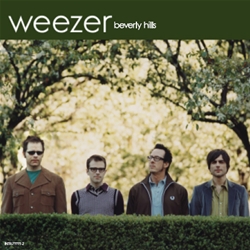
Weezer - "Beverly Hills" Make Believe (Geffen)

Rivers Cuomo has turned being ironic in three minutes or under into an art form, and it's brought Cuomo and Weezer success. In the post-Nirvana 90's, Weezer was labeled the voice of the geek, the outsider, and no one could have expected in ten years this band sitting at the cool kids table.

So, what happens when the geeks try to be somebody they are not? Well, "Beverly Hills" is the result. The theme of insecurity runs through many of Cuomo's songs. Never good enough. Never part of the crowd. But in the course of ten years and five albums you'd think people would have gotten the point by now. Rivers, you had me at "Tired Of Sex." On the band's self-titled album (the Blue album), producer Ric Ocasek (The Cars) helped give Weezer the polished pop sound with a harder edge that The Cars slipped away from during their career. That sound hasn't changed much. If anything, Weezer has adopted the trappings of arena "rawk" with big drums, big guitars, and big, anthemic choruses.

"Beverly Hills" could have been written while Cuomo slept in-between classes at Harvard. The delivery is straight-forward and simplistic, a formula Weezer has perfected. The difference this time is that the band isn't doing anything extremely interesting. "Beverly Hills" is an edible song that doesn't leave much of a taste in your mouth afterwards. Maybe that's how you get radio to play your songs.

Does "Beverly Hills" pull Weezer's fifth album Make Believe into the trash with the scraps? No. But when Weezer films a music video at the Playboy mansion and sings about being a "no-class, beat down fool" the irony gets old. Scott Lucas of Local H expressed a sentiment that possibly many non-West Coast folk hold deep down, "We know you love L.A./There's nothing more to say/Please no more California songs."

Friday, April 15, 2005

Side Tracks


Which British Band Are You?
I was born into a Beatle family and ended up to be a proper fookin' madferit Mancurian. Cheers!

Friday, April 08, 2005

On Track


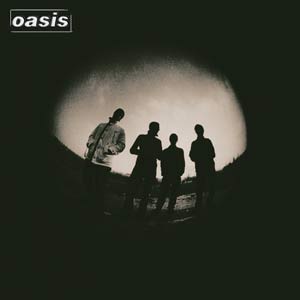
Oasis - "Lyla" Don't Believe The Truth (Epic)

"Calling all the stars to fall," declares Liam Gallagher in his sneering voice at the start of the new Oasis single "Lyla." The band's first single in three years isn't anything Oasis fans haven't heard before but just the fact Oasis are gearing up in 2005 is enough for them.

Don't Believe The Truth is set for release on May 30 and marks their sixth release, not counting 1998's The Masterplan, a collection of B-Sides, or Familiar To Millions, the band's live document of their July 21, 2000 performance at Wembley Stadium.

"It's The Soundtrack of Our Lives doing The Who on Skol in a psychedelic city in the sky," said the always straightfoward Noel Gallagher about the inspiration for "Lyla." He's not lying. The Soundtrack of Our Lives were tour support for much of the 2002 Oasis campaign, while The Who invited Oasis to share the bill for the 2002 Teenage Cancer Trust charity shows at the Royal Albert Hall. So, needless to say, Noel had time to do his homework.

"Lyla" has an uncanny sound that leans more towards The Soundtrack of Our Lives, specifically "Confrontation Camp" from the Swedish group's first album Welcome To The Infant Freebase. Perhaps it's also a knod to The Kinks' "Lola" as well? Maybe "Layla"? But through Liam Gallagher's voice anyone else's song becomes an Oasis song. For good measure, Noel even resurrects his past lyrical work. The line "Catch me if I fall" also appears in "I Hope, I Think, I Know," from the band's third album, the only album Noel might put an asterisk next to in the Oasis catalog, Be Here Now. And let's not forget the Beatles association. The timeless arguments that Oasis have made a career off the mopped-topped Liverpoolians can now be laid to rest with the addition of Ringo Starr's son Zak Starkey as their new drummer, replacing longtime member Alan White.

Everything that makes an Oasis song are at work in "Lyla" but with little variation. Attitude has always been the key component to their songs regardless of the narrow subject matter Noel Gallagher is writing about. "Lyla" is a good rock and roll song--no more, no less. Noel Gallagher is a mirror to the past. His songs will always breathe with a flash of The Beatles, The Who, T-Rex, and The Rolling Stones. What the hell does "Yellow Submarine" mean today? He's a hit or miss songwriter, and he'll be the first to admit he's not an English scholar. But have polished skills in poetry ever been a requirement to write a rock and roll song?

Wednesday, April 06, 2005

Queens of the Stone Age @ Vic Theatre (4/5/2005)


Screaming Lullabies: Josh Homme of Queens of the Stone Age

There are those who pose, and there are those who are the real deal. Queens of the Stone Age are by far not a group of fakes. A sold-out crowd at the Vic Theatre looked past the fact that long time bassist Nick Oliveri was no longer a member of the band and gathered for what they've come to expect of the band--a mucky cesspool of blistering metal and hard rock.

The ousting of Nick Oliveri created a stir among fans. Although Queens of the Stone Age is unmistakably Josh Homme's band, Oliveri--Homme's partner since Kyuss--was a collaborator that provided a stable face amidst a cast of changing characters. When Mark Lanegan of the Screaming Trees and Dave Grohl of the Foo Fighters lent their services to the Queens the band's profile entered the super-group stratosphere with 2002's Songs for the Deaf. On stage, the band have proven worthy of the hype as torchbearers of the brand of rock paved by the likes of Black Sabbath and AC/DC. On Lullabies to Paralyze, Queens of the Stone Age head forward to a familiar grueling beat.

It would be unfair to judge the group's performance having never seen Oliveri with the group, or for that matter Grohl or Lanegan. The theatrics on stage were minimal aside from a white curtain that dropped from their ceiling as soon as "Someone's In The Wolf" ignited the show. Anyone on the dance floor that was able to keep their cup of beer from flying away deserved a medal. Pockets of moshing erupted but didn't stop the overall crowd from focusing on the stage. Well, there was a notable fan whose eagerness to have a good time became unbearable to the point that four fans grabbed him and led him to the awaiting security in the front. Sometimes being overly enthusiastic and inebriated don't sit well with others.

That lone incident aside the show never missed a step. With 50% of the set consisting of tracks off Lullabies to Paralyze, the band went to Rated R and their self-titled debut album to give the fans a mix of the past with the present. "Earlier today, I was supposed to take one teaspoon of this codeine cough syrup," said Homme regarding the noticeable vocal strains. "I drank almost the entire bottle. So, for every one of you, I see an extra four of you."

Although slightly hampered by a cough Homme did his usual howl and croon at the microphone. In between songs, Homme was loose with his chatter and joking with guitarist Troy Van Leeuwen. Homme took a moment to dedicate "Burn The Witch" to recently deceased comedian Mitch Hedberg. There was never a sense throughout the show that the band ever felt self-important but predictability surrounded their performance. In the world of Queens of the Stone Age there are two speeds: fast and faster. The transitions from the fanatically fast ("Medication") to the hypnotically fast ("Monsters In The Parasol") became almost mind numbing. It was like riding the crest of an ocean wave one second and then suddenly falling to its very bottom the next, only to be shot back to the top. Their flawless machine-like precision was explosive during "Song For The Dead," definitely a show highlight. Drummer Joey Castillo worked his drum kit like a team of oxen. If there had to be a song that epitomized the kind of flat out steady, weird smoothness Queens of the Stone Age are capable of, it was "Long Slow Goodbye." The show's closer "Regular John" could have ended the night on a high but instead saw Homme and Van Leeuwen trade off guitar solos; maybe one solo too many that didn't seem to go anywhere extraordinary.

Queens of the Stone Age may only have one trick up their sleeve but how they pull it off remains to be their strength. They are just a loud rock band, and to Homme and his bandmates, that's maybe all they want to be.

Tuesday, April 05, 2005

The Pilgrimage Gains Momentum: R.E.M. Reaches 25 Years


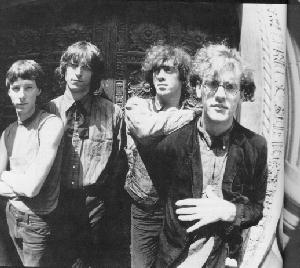
R.E.M. Fresh Out Of The Kudzu: (l to r) Mike Mills, Peter Buck, Bill Berry, and Michael Stipe

There will never be a way to understand the mystery that is fate. Who would have known twenty-five years ago that the house band playing your friend's birthday party would go on and become one of the most important rock bands of the past thirty years? Certainly not the band.

On April 5, 1980, R.E.M. performed for the first time during a friend's birthday party in Athens, Georgia. Seven months and twenty-five days later that same year, during a blizzard in Chicago, I was born (nearly named after Ringo Starr, too). It's funny to think that the band that changed my life has existed as long as I've been breathing. I was 13-years-old when I felt the impact of R.E.M.'s music. My aunt randomly selected Lifes Rich Pageant as her gift to me for my 13th birthday. It was the first CD I ever owned. Everything just changed after that.

All things Seattle were dominating music at that time. I liked Pearl Jam. I liked Nirvana. But neither of them hit me over the head the way R.E.M. did with just that sole album. My mornings before school began with "Begin The Begin." All I talked about in 7th Grade was this band called R.E.M. I read every article I could about them, learned about their beginnings, soaked in their words, and soon was caught up with the stories. I listened to Lifes Rich Pageant so much that I knew Peter Buck's guitar changes by heart, and I didn't even play guitar...yet.

By the time I turned 14, I owned all of their pre-Warners Bros. albums. I even wrote a letter to R.E.M.'s home office in Athens, GA asking if they could visit my grammar school for Career Day. I wish I knew where I put the letter they sent back, politely declining because they were busy making what became Monster. Yes, I was a geek, and still am.

The very same aunt responsible for my teenage awakening also provided my first guitar--a classical guitar from Mexico. It may not have been the 12-string Rickenbacker guitar Peter Buck played, but it was the first step in the right direction. I felt free. Once I understood chord shapes I would hunt down the guitar chords and learn practically each album. Upon discovering how to play the songs I would say things like, "All he's playing is a D chord!" and "They wrote a song with three chords?" It was probably the closest to the punk mentality I had ever gotten to by that point. It was that idea that anyone can do it.

Let's not forget the 8th Grade school play. And pray tell what was my audition song? "Fall On Me" from Lifes Rich Pageant. My voice, already plagued by puberty, allowed me to cover Michael Stipe's lead vocals and the bridge sung by Mike Mills. To my shock, I was given one of the lead roles. When it came time to work on dance steps for my part I borrowed from Stipe's moves in the video for "What's the Frequency, Kenneth?" Enough said.

Then that crucial musical moment finally happened--the first rock concert. The night before my 8th Grade graduation I stood with a sold-out crowd on the first of what was a three night stand at the Rosemont Horizon, June 2, 1995. That night still makes me smile.

This was the band that mattered the most to me, and they still do. I still remember hearing the announcement on WXRT in my dad's car that Bill Berry was leaving R.E.M. You always hear about the other bands that breakup or lose a member but don't ever think your band will turn into those other bands, other people's favorite bands. It was a reality check. All I could do was wait and see what happened next with R.E.M. When the decision was made to continue without Bill in the band it was tough to accept. Like a fan, I think I was more concerned about the band's legacy than the band. But was it better to not have R.E.M. anymore?

Just as I--and I'm sure many others--never imagined the band losing a member, I never imagined actually meeting one of them, let alone two of them. It was July 2002 at Metro. The Minus 5, Tuatara, and Cedell Davis were touring together that summer. I brought my copy of Lifes Rich Pageant to the show with the hopes that Peter Buck would autograph it. I had met Scott McCaughey of The Minus 5/The Young Fresh Fellows two months earlier at Schubas for a show he performed with his wife, Christy McWilson. Somehow he remembered me when I approached him after the show, and he helped me get my CD signed by Peter. Away I watched Scott leave to the dressing room with my CD. Just as he disappeared, Peter appeared from outside the club asking where Scott was to which I told him where Scott had gone. My first reaction to that quick meeting was, "I just gave Peter directions." I couldn't hold back the geek in me.

Peter entered the very same room Scott had, and, soon, Scott reemerged with my autographed CD. I humored him with the significance of the CD. Scott had joined up with R.E.M. for their '95 tour. At that moment, we were just two guys talking about a band we both loved a lot. With Scott's assurances I stuck around the lobby of Metro for Peter to come back out so I could personally thank him for the autograph. Meeting your musical hero is a scenario where you ALWAYS play it cool in your head. Your words don't stumble over each other, and you keep your geek-hood in check. Telling Peter that R.E.M. was my first concert, the night before my 8th Grade graduation, with my entire family didn't really fall into the latter category. At least for a brief moment I got to say my thanks to the one person who opened my eyes to so much I never knew was there inside me.

While I reserve the right as a fan to criticize and praise the work they have amassed since then I always hope for the best. I see a correlation with R.E.M.'s current commercial status with that of Queen's in the early 1980's. Like Queen, R.E.M. control an exceedingly vast level of success globally except in North America. It's frustrating to think that R.E.M. are not appreciated in the U.S. anymore as they were in 1995. I guess in some way the band saw it coming. They knew that perhaps they may never be in such a position again where their popularity would be so high. But they are in fact far more popular outside of the U.S. than they have ever been.

Winning the popularity contest was never R.E.M.'s game. There's a reason why they are celebrating a body of work that spans twenty-five years. R.E.M. has outlasted the bands that were supposed to be better than them. There remains an audience that wants to hear what they have to offer. That in itself matters more than record sales. If the work continues to make me believe that there's still plenty of music left in the tank, then I say go as far and as long as you guys want.

Thursday, March 31, 2005

Exploring The New World: Poi Dog Pondering Joins The Chicago Sinfonietta


New Turf: Frank Orrall At Symphony Center

On June 7, 1970, The Who performed an afternoon and evening show at the Metropolitan Opera House. The famed New York hall known for housing performances of Mozart and Beethoven became the unlikely spot for the band's rock opera Tommy. At the time, it was an unprecedented move for a rock band to take the stage of the Metropolitan Opera House, a symbol of classical music and the high society establishment.

Jump ahead to March 21, 2005 when Poi Dog Pondering unites with the Chicago Sinfonietta to hold a concert at Symphony Center for a performance of 19th century composer Antonin Dvorak's "From the New World" Symphony No. 9 in E minor. Skepticism is always quick to arise when news spreads of a rock band collaborating with a symphony. The very notion of rock mixing with classical have been generally viewed as a pompous experiment--an attempt to win validation as musical visionaries. But in the case of Poi Dog Pondering, the idea of the band working with a celebrated classical group just made sense. For almost 13 years, Poi Dog Pondering have held a special place in the Chicago scene as being a constant sea of creativity, always changing, and never remaining still. Rock. Folk. Electronica. Dance. There isn't a single style of music this band hasn't adapted into their sound. Since forming in Hawaii it has been nearly 19 years of realizing dreams for singer Frank Orrall and Poi Dog Pondering.

The band was never a stranger to the classical world. As the only original member still working in the band, Susan Voelz provided the classical touch with her talents on the violin. Voelz received a classical partner a few years ago with the addition of cellist Alison Chesley whose resume included the duo Jason & Alison and the once promising rock band Verbow, led by Evanston native Jason Narducy. Poi Dog Pondering was designed in many ways as a self-contained orchestra capable of making musical ideas a reality. Many of their fans also know that the Symphony Center show was not the first time the band had shared a stage with an orchestra. In 1996, the band was backed by the Grant Park Symphony Orchestra to perform their album Pomegranate in its entirety at the Petrillo Band Shell.

Conductor Paul Freeman and the Chicago Sinfonietta approached Poi Dog Pondering about working together. "He's notoriously adventurous," said Orrall about Freeman. Orrall had done a remix edit of Dvorak's "New World" about 4 years ago with his electronic side project 8 fat fat 8. "I just heard it on public radio one day," said Orrall. "I was really involved in sampling at the time. I took a lot of stuff for 8 fat fat 8, and I heard a lot of tones and musical passages that I wanted to grab as samples."

Through the Dvorak piece Orrall had chosen the bridge that could link the two groups together and rehearsals soon began to formulate a reinterpretation of "New World." Voelz and fellow member Paul Von Mertens combined their efforts to make the classical piece fit with Poi Dog Pondering.

For several people attending the show at Symphony Center, it was quite possibly their first time inside a classical venue. It was a far cry from a Labor Day weekend stint at an air conditioned crippled Double Door. Freeman and the Sinfonietta started the evening with material by composer Samuel Coleridge-Taylor before leading into a performance of "New World" in its original version. After giving the audience a taste of Dvorak's work, Poi Dog Pondering assembled on the stage to a rousing applause. Looking out to the audience Orrall took to the microphone, "It's a real blessing to be here." Opening with "Angelika Suspended," the band used the instrumental song as a transitional device in the show. Scaled down from their club shows the band took the all acoustic arrangement to provide their own reinterpretations of songs from their catalog like "Pulling Touch," "Bury Me Deep," and "Simple Song." Orrall specifically points to "Bury Me Deep" as a song that needed to be performed. According to Orrall, "We thought it would thematically fit with the end piece."

Building up further to "New World" the Sinfonietta joined the band for performances of "Catacombs" and "Big Constellation." The sheer volume of the non-amplified Sinfonietta married with the amplified band was something that Freeman pointed out as one of the exciting challenges the collaboration posed. Finally, "Fantasy and Remix of Themes from Dvorak's New World Symphony" was introduced. Always one to touch every human sense, Orrall supplied a film to coincide with the performance, bringing Dvorak to the music video era. From life to death, the video projected aspects of today's world; a world of high tech industry, business, communication, fashion, love, and hate. It was Orrall's visual concept of what Dvorak might have thought the new world to be.

With the addition of the Sinfonietta, Poi Dog Pondering masterfully raised the artistic level of their songs to possibly some of the most breathtaking musical peaks ever. "It's a career high point," said Orrall when reflecting on that night. "It strecthed us."

Taking a chance is what Poi Dog Pondering lives for, and their success at Symphony Center is a testament to years of dedicated work to their craft. The venue certainly shed new light on the band and audience members maybe walked away with a stronger appreciation for the type of magic the band produces with every show they perform. "It was very different," said Orrall about performing at Symphony Center. "One thing that was nice is that it changes the dynamic in a certain way where I think everyone listens a little deeper." Dvorak's "New World" may very well have opened a totally fresh avenue for Poi Dog Pondering's future."I think we're going to try and add this to our set list," said Orrall. "I think we can do a version by ourselves."

If there ever was a time and place where music captured emotion, made you feel absolute joy, then Poi Dog Pondering, on that very night, did just that. They demonstrated once again why they are a beloved treasure in the Chicago music community.

The Soundtrack of our Lives @ Metro (3/28/05)


A Swedish Riot: The Soundtrack of our Lives Tear Metro

"It's just another manic Monday," jokingly said Ebbot Lundberg, lead singer of the Soundtrack of our Lives. Regardless if it was a Monday or not, the Swedish sextet stomped out another manic performance as they returned for their second Chicago visit this year.

It seemed like it was yesterday when the Soundtrack of our Lives arrived in a harsh Chicago blizzard. In mid-January at the Double Door, the band unveiled their fourth album Origin Vol. I to a sold-out audience more than willing to be snowed in if the situation arose. With the snow gone and their new album officially released in the U.S., it was business as usual for the band as they continued their current tour through the states.

When the Soundtrack of our Lives take a stage it's without mercy. The stage is where this band shines, and they have the songs to back up their swagger. There isn't a stage big enough for them. They stood before the Metro crowd as if they were playing Wembley Stadium. Their showmanship is a display of rock and roll's past coursing through their veins. Unoriginal? The Who they may never be, but their natural energy can not be questioned. If there is one thing to walk away from an experience like a Soundtrack of our Lives show, it is that they leave no stone unturned. Nothing is off limits. Nothing is impossible.

Anticipation was everywhere, from the balcony to the dance floor. The band steadily rolled and tumbled with the opener "I Believe I've Found," and, like lightning, struck with "Infra Riot." Guitarists Mattias Barjed and Ian Person unleashed a column of power chords behind the tribal opening beats of drummer Fredrik Sandsten's attack. Lundberg moved with the uninhibited force of Iggy Pop combined with the steps of James Brown, and there was still plenty of show to be played.

However much the band leveled the crowd with their sheer volume they also added a mix of twists and turns. Behind the keyboards, Martin Hederos provided spectacular moments that gave extra dimensions to the band's performance. One such highlight came when he, Lundberg, and Barjed on acoustic guitar gave a moving rendition of "Song For The Others." The somber quietness of the song laced with piano and Lundberg's raspy, soulful vocals spoke louder than any other song in the set. It was proof enough of how much versatility is at work in the band.

Between Sandsten and bassist Kalle Gustafsson Jerneholm, the band maintained a concrete foundation. "Sister Surround" was too irresistible a groove for the crowd to succumb to and "Transcendental Suicide" was a rock epic in every respect, from the grabbing chorus of "We're gonna last forever" to the rapturous solo. As the second and what seemed final encore reached its peak, Lundberg began singing the opening lines to "Instant Repeater '99" to the pleasant surprise of the band. Before long Lundberg departed the stage to perform from the floor of Metro, parting the crowd as he strolled by singing. The band and crowd were in a unified frenzy.

Like the great showmen that they are, the Soundtrack of our Lives left the stage like they were the biggest band in the world and an audience demanding for more. A show like this leaves any attendee believing that these Swedish rockers could last forever.

Extra! Extra!

The April issue of Chicago Innerview is now available on-line:

http://www.chicagoinnerview.com

I contributed a feature piece on Queens of the Stone Age:

http://www.chicagoinnerview.com/archives/apr05_queens_of_the_stone_age.htm

As well as a Q&A piece with Tim Butler of the Psychedelic Furs:

http://www.chicagoinnerview.com/archives/apr05_the_psychedelic_furs.htm

Monday, March 14, 2005

Extra! Extra!

Chicago Tribune rock critic Greg Kot examines the long awaited Chicago Music Commission and how this impacts the local music scene.

City, music scene to unite benefitting concert-goers
By Greg Kot
Tribune music critic

March 13, 2005

After years of mistrust, fear, fines and music-club shutdowns, punctuated by the 2003 disaster at the now-shuttered E2 nightclub that claimed 21 lives, the City of Chicago and its music scene are for the first time taking tangible steps toward building a mutually beneficial relationship.

A multifaceted dialogue involving city officials, club owners, record-company and studio owners and music-industry veterans has created the Chicago Music Commission, which aims to raise Chicago's profile internationally, turn its musical variety into a major tourist attraction and bring millions of additional dollars into city coffers and businesses.

One city official called it the Chicago cultural equivalent of the Czech Republic's "velvet revolution," in which the communist regime quietly gave way to the coun-try's first free elections in 40 years.

"It feels like this silent change, where the work of a couple of individuals has quietly spread into the music community and the city over the last year, and now you've got people on both sides working together to make something positive happen," says Mike Orlove, planning director of the city's Department of Cultural Affairs. "It's a real turning point."

The ultimate beneficiaries will be Chicago's music fans.

"On a grander scale, if the city and the music community are on the same page, it creates a better quality of life for everyone in Chicago," says Chris Schneider, owner of Pressure Point recording studio on the South Side and one of the music-industry veterans who has been most intimately involved in discussions with the city. "There will be more things happening, a more open atmosphere for good things to get done. Musicians and people working in the industry are going to benefit, and that's going to be a great thing for the city as a whole."

In the works is a Web site that will serve as comprehensive information source for music lovers looking for everything from record stores in a particular neighborhood to the starting times of all the bands at a summer street festival. "For the consumer, this is an awesome prospect," Orlove says.

It all kicks off officially April 19, when an umbrella association representingall aspects of the Chicago music industry--including musicians, club and label owners, recording engineers and studio proprietors, booking agents,entertainment lawyers and publicists--will be launched during a concert and party at Martyrs' on Lincoln Avenue. The board of the Chicago Music Commissionis made up of local music veterans representing a cross-section of the scene, including Schneider, photojournalist Paul Natkin, Alligator Records President Bruce Iglauer and Martyrs' owner Kate Hill. It has been meeting for nearly a year and aims to become a resource, advocate and lobbyist for all things involving Chicago music. To many observers, it's a long overdue answer to music commissions in Texas and Louisiana and a companion group to the League of Chicago Theaters.

"It's a necessary entity, and the speed with which it has come together in just the last year proves it," says Julie Burros, a city official with the Department of Cultural Affairs who has been consulting with the commission since its first meeting last winter. "When you look at how much the League of Chicago Theaters has done to raise awareness of that community, the merits of a music-industry group were really obvious to the city."

Chicago can legitimately claim to be the incubator for musical genres ranging from jazz, gospel and urban blues to house and industrial, as well as being a major national presence in classical music, alternative country and hip-hop. But the city has long ignored its music scene, and in recent years seemed genuinely hostile toward it, with ordinances cracking down on everything from the rave scene to rock clubs. "The result is that great stuff happens here, people get noticed, a certain energy happens, but because there's no infrastructure to support it, the second city syndrome takes hold and the success is never exploited," Schneider says. "It never translates into Chicago being recognizedas a music town on par with Los Angeles, New York, Nashville or even Austin[Texas]."

The goal of the commission is to provide a central focus for a vast, fragmented scene that rarely shares information or pools resources, and to act as an advisory board for a city that in the past has missed opportunities to nurture its indigenous music resources.

It is expected to hire a salaried executive director, open a music office in Chicago and begin recruiting dues-paying members at the April 19 Martyrs' show. Membership will include not only music-industry professionals, but those who aspire to a career in music. Its mission will be similar to the League of Chicago Theaters, a 26-year-old alliance that promotes its industry around the world while working with 170 theaters, ranging from store front companies to multimillion-dollar operations.

"We're building a community that will cross every musical genre," Natkin says. "People in the music business by nature are self-contained. But if the musical pie here is made bigger, everyone gets a bigger piece."

The commission will be designated a delegate agency, meaning that it will function as a private, self-governing non-profit group that will work inconjunction with the city and could be partially funded by the city. In that respect it differs from other agency groups such as the Texas and Louisiana music commissions, which are fully funded arms of state government.

"We believe the music commission should be run by music-industry professionals, because we feel we know best what the interests of the music community are," Iglauer says. "At the same time, to move forward we need a formal relationship with the city, and need to work with them hand in glove."

That unprecedented step was green-lighted by Mayor Richard Daley last summer ina meeting with Iglauer, and the commission's early liaison efforts with a widerange of city officials have been shepherded by his chief of staff, Sheila O'Grady. Meanwhile, a group of some of the city's most prominent club owners and promoters has been holding regular meetings, and has had face-to-face discussions with O'Grady and members of all the city's licensing departments in an effort to improve a relationship that was in tatters only a year ago.

'Monumental' moment

"It's monumental," says Metro club owner Joe Shanahan. "A group of licensed music-club operators are sitting in a meeting with city commissioners and having a dialogue. This is the first time something like this has happened in the morethan 20 years that I've been running a club in this city, and I can't applaud more loudly that it has finally happened."

Marguerite Horberg, owner of HotHouse, a respected club briefly shuttered by the city in 2003 for having an improper license, strikes a more cautious tone, but is also optimistic. "We're just at the very beginning of trying to establish some kind of trust, and it's still premature to see how the city will play it," she says. "But Sheila O'Grady sent a strong message setting up that meeting. It indicated to me that there was interest and willingness to have a dialogue, whereas I thought the relationship was adversarial before."

Only a year ago, if the owner of a music club in Chicago found herself in the same room with a bunch of city commissioners, it could be for only one reason: A penalty, ranging from a fine to a complete shutdown, was about to be meted out. E2 sent a chilling message heard by all club owners: Upgrade safety, or else. But veteran club owners also felt they were being scapegoated, branded as troublemakers even though they had operated for years, if not decades, with a clean safety record.

The pressure from the city was so intense that several prominent club owners contemplated closing, and the future of one of the best live music towns in the country became clouded.

"I wouldn't recommend that anybody try to open a club in Chicago now," said one blues club general manager last winter amid a wave of city inspections. "I'd like to own a club someday, but I'd never do it here."

"It was so easy to have everything taken away from you," says Kate Hill, co-owner of Martyrs', speaking of the mood across a city music scene scarred by the E2 disaster. "There was a feeling of fear that rolled its way through a lot of music venues, that at any given time you could be shut down."

Weekly visits by inspectors representing fire, police, building, liquor licensing and other city departments doubled. In 2003, the fire department alone conducted more than 2000 spot night inspections and closed 16 clubs at least temporarily, most for exceeding occupancy limits.

Martyrs' found itself facing a city hearing last winter when a concert by the Spanish band Ojos de Brujo was shut down for alleged overcrowding. The club wasfined $2,500.

But in the months since then, Hill says, the tide has been turning. "In past years, if a club owner was going through a problem, you felt alone," she says. "Now, we're all starting to realize that we face many of the same problems. We're getting organized and we've found someone in Sheila O'Grady at the highest levels of city government who is adamant about working together with us and finding solutions. We're trying to clarify and streamline the process of working with the city, and create a better business atmosphere that can benefit everyone."

Better for everyone

Orlove watched as inspectors shut down the Ojos de Brujo show, one his city department sponsored. "Both sides [the city and the club owners] made mistakes, and something like this club owners group needed to happen years ago," he says. "But I'm happy it's happening now. The fact that club owners sat with all the regulatory agencies indicates there is some serious intent on both sides to clear the lines of communication. That the club owners are organizing to voice their concerns in a collective way is long overdue, and something that the city will appreciate."

The group aims to provide a voice for the best-run clubs, the lifeblood of the city's night life and a destination for millions of music fans and tourists annually. "It's an indication that the city understands the importance of live music to Chicago, that the city wants to keep it going," Hill says.

The club owners plan to expand their group to include other venue operators soon, and aim to continue meeting regularly to discuss mutual problems. Indealing with everything from day-to-day business to a crisis, the group aims to act as a sounding board for club owners and work directly with a yet-to-be-named City Hall liaison to streamline communication, arrive at solutions and exchange information.

In addition, they are working with O'Grady to schedule at least one meeting a year with city commissioners. "We needed a dialogue, and we got one," Shanahan says.

Much of the agenda for the club-owners group and the music commission is still being determined. "A lot here is unpredictable and in a fragile state," Iglauer acknowledges. "We're still in the process of defining ourselves." O'Grady declined to be interviewed for this report because she said through a spokesman that the projects were still in their infancy, and that she preferred to wait until "plans become more concrete."

But there are signs that progress is being made. Already on the docket is a series of six nuts-and-bolts educational seminars for music-industry novices beginning in the fall at the Cultural Center that will be co-sponsored by themusic commission, the city and Columbia College Chicago. In addition, the city and the commission are collaborating on a massive Web site that will serve as a central information source for music events citywide, "the Google of the Chicago arts community," as Natkin describes it.

"It will be very fan interactive," he says. "Tourists and music fans will be able to find out where and when every show and festival in town will be playing, what the nearest `L' stops are, where to park, where to eat, discounts on nearby hotels, the names of nearby record stores."

In addition, musicians and others interested in joining the business or working their way up will find information on everything from rehearsal space and auditions to a guide on how to get a show in every club, he says. "It'll be one-stop shopping for all things music in Chicago."

The commission also plans to tackle a massive economic impact study with Columbia College to determine the financial benefits that the music scene brings to Chicago. Though arts-related tourism pours $300 million a year into Chicago, there has never been a comprehensive study of the economic impact music has on the city. There's little doubt that the figure is in the tens of millions, and could be increased with greater promotion and exposure. Among the items being discussed are a music conference spotlighting homegrown talent, promotional CDs of Chicago's finest music in all genres, and a broader presence at international festivals such as the annual MIDEM trade show in France.

"We're juggling about 20 balls, and if we catch 10 of them we'll be in great shape," Natkin says.

For Iglauer and other longtime members of the city's music community, the commission's juggling act is a necessary risk. "We are faced with declining record industry numbers [CD sales for the first two months of 2005 are down 10 percent from last year], a lot of clubs have closed, club business is down, and the summer concert business is way off," Iglauer says. "I think it's not only possible that we build a better relationship between the city and the music industry here, but that it's essential that we make it happen. We need to do this to nurture our industry, because our industry needs help."
Wednesday, March 02, 2005

Extra! Extra!

The March issue of Chicago Innerview is now available on-line:

http://www.chicagoinnerview.com

I contributed a feature piece on the U.K. band The Futureheads:

http://www.chicagoinnerview.com/archives/mar05_the_futureheads.htm

On Track


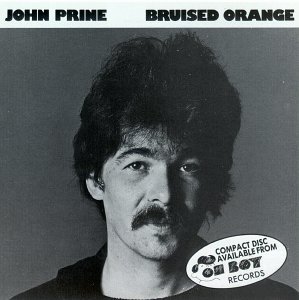
John Prine - "If You Don't Want My Love"
Bruised Orange (Oh Boy Records)


With a voice quickly compared to Bob Dylan, the folkster John Prine sings, "If you don't want my love/I know who I'll give it to."

Moving on and remaining on both of your feet; two moments that confronts you when the love you try to give to someone else just doesn't work out. Maybe you tried too hard? Or maybe you opened up too easily and laid yourself open to have your heart walked over? To try and love again is never a simple path that anyone can take.

With angelic backing vocals floating in and out, a relaxed drum beat, and the soft touch of a slide guitar, John Prine captures the confidence that comes with love. There is strength in a song that declares if the love you have to offer isn't wanted then it will be given to someone who will want it, and that person will be the luckiest person in the world. We all have thought at some point or another that our love can never be beaten by another. They can be a husband, a wife, a boyfriend, a girlfriend, an optimistic crush, or just a friend.

Prine conveys a quiet shrug of the shoulders. It's almost like a point of no return as if he is saying to someone else, "If you don't want me now, don't try looking for me later." No games. Prine is ready to take back his love and walk off into the sunset without looking back or saying long goodbyes. This is a song of acceptance. It is the acceptance that another's heart can not be told to feel a certain way. It is the acceptance that two hearts sometimes can not find a common ground no matter how hard the two try. It is this acceptance that Prine comes to realize in "If You Don't Want My Love," and it is this realization which proves to be as equally challenging as moving on with your heart.

Saturday, February 12, 2005

On Track


The Kinks - "Young And Innocent Days"
Arthur (Or The Decline And Fall Of The British Empire) (Reprise Records)

Of all the bands involved in the British Invasion of the 1960's, The Beatles and The Rolling Stones being the top of the class, The Kinks hadn't really made much of an impression on me like their contemporaries The Who had made. It took two veteran musicians performing on a July night in Pittsburgh, PA to give me a glimpse of The Kinks in different light.

It was at the Club Cafe where Dag Juhlin (The Slugs, Poi Dog Pondering) and Scott McCaughey (The Minus 5, The Young Fresh Fellows) shared the stage as openers for John Wesley Harding during his All Male Threesome tour. Juhlin and McCaughey gave the packed club a rendition of "Young And Innocent Days" by The Kinks. I stood in the back of the club thinking what a pretty song it was; a melody that never leaves your ears and lyrics that stick with you. Those very qualities have stayed with me for seven months now.

The passage of time becomes more and more apparent as the years go by and every now and then there is a moment of reflection, "Young And Innocent Days" is that moment. Maybe Ray Davies is writing about a time of his life that will never happen again, or realizing that change can't be stopped and life isn't really "sugar coated." In many ways it encapsulates the denial and acceptance that comes with growing up. Davies is handing the listener a mirror in order to look at themselves and not hide from the fact that they will never be young and innocent ever again in life--that day has past. Musically speaking, The Kinks convey this message magnificently with the usage of the harpsichord as this representative sound of the past, of royal ballroom dances, of a simpler time.

Ray Davies the storyteller; I'm beginning to understand why that title fits him so perfectly.

Wednesday, February 09, 2005

Secret Machines @ Metro (2/4/2005)


Secret Machines: Tripping the Light Fantastic At Metro

The Secret Machines are becoming very good friends with Chicago, and returning to Metro for a sold-out show was a clear indication that the trio from Dallas are welcomed in the Second City anytime.

By no means are the Secret Machines strangers to Chicago. Working with producer Brian Deck (Red Red Meat, Califone), the band recorded their EP September 000 (2002) before their creative efforts finally reached fruition with last year's debut album Now Here Is Nowhere. Josh Garza and brothers Brandon and Benjamin Curtis are riding a wave of momentum right now, fusing influences like the Flaming Lips and Led Zeppelin to paint a soundscape rich with color.

Their stage set-up may throw off first timers to their show, but it says a lot about how these three musicians function as a band. Rather than facing the audience Garza's drum kit and Brandon Curtis' keyboards are turned to face each other, with guitarist Benjamin Curtis positioned in the middle. This stage dynamic allows for maximum eye contact with each member, which, on stage, plays a major factor in the band's ability to communicate without even saying a word; that magical sixth sense that some bands fail to nuture over time.

Opening with the thunderous "Sad And Lonely," the band wasted no time in making their presence felt, and with the Secret Machines, the audience not only hears the music but feels it like a mighty gust of wind to their face. Benjamin Curtis uses his guitar effects rig wisely, opening an array of sounds that serve the songs rather than drowning them out. One example of his sense of control was the hypnotic phasing of chords he orchestrated during "The Road Leads Where It's Led," that acted very much as a rhythmic tool in the same sense as the drums did. But there are not enough tricks that could match or even duplicate the bone crunching stampede of drummer Josh Garza. With a great balance between chaos and discipline, Garza is a force. His very straight-forward drum kit is highlighted with a mammoth bass drum that the late John Bonham would give his stomp of approval. Song after song, Garza never let up as his clothes became covered in wood dust from his drum sticks furiously hitting their marks. If presented with the task, Garza could possibly turn coal into diamonds. Brandon Curtis rounds out everything as the voice of the band. Throughtout the night he dazzled with vocals that were melodic, manic, and tender, especially on the melancholy "You Are Chains."

The intensity that flowed through "Nowhere Again," the evening's curtain call, found the trio leaving it all out on the stage, never wavering once. It was a flawless performance by a band not ever appearing to be going through the motions. Each note was daring as it was exciting. The Secret Machines have surpassed the hype but more importantly have gained respect.

Friday, February 04, 2005

A Salty Salute


The Official Ironmen: Robert Pollard & Guided By Voices (Photo By: Chris Castaneda)

Once in a while there comes a band you discover that fans have rallied for all throughout the band's career. There's an effort made by yourself to try and wrap your head around what makes this band something you should pay attention to, something that you need to hear. For me, Guided By Voices were one of those bands.

I guess it was destiny that I would not get a chance to say goodbye to this band out of Ohio, that the three times I've seen them in concert would be the only times I see them. On December 31, 2004, Guided By Voices chose Chicago's Metro as the place were they would make their last call to their fans. Where was I instead of there? Section 4 of Madison Square Garden for Wilco's New Year's Eve show in New York. It was the type of situation where you don't like having to pick between two of your favorite bands. One is a band you were knocked out by during an opening set for R.E.M.'s 1999 concert at the World Music Theatre on a pleasant August day; the other was a band your father would blaringly spin on the home stereo system, sometimes as a sort of wake up call to the rest of the family and neighborhood on the weekends.

My father provided my introduction to Guided By Voices, but it took a girl named Jen that shared an English class with me during my junior year at DePaul University to really make me listen. You sometimes do silly things when you have a crush on someone and trying to understand someone else's musical tastes can be one of them; it was definitely less excruciating to open my ears to Guided By Voices than it was the Dave Matthews Band. But it all made absolute sense to me when I finally saw GBV headline the 2002 Hideout Block Party. There was singer/songwriter Robert Pollard and the guys, in the flesh, and probably already buzzing. Pollard was a statue, right hand tightly fixed on the microphone with his left hand hanging onto the cord and this volcanic voice covered in a British accent. Each song was like a punch in the face that actually left you smiling and wanting more. At 45-years-old, Pollard had the energy of a teenager, swinging the microphone like The Who's Roger Daltrey, leaping like Pete Townshend, dancing around on one leg doing kicks, which to me mimicked the crane kick from The Karate Kid, and catching beer bottles he had flipped in the air before downing them in mid-song.

By the end of the night, the band finished off more drinks than they played songs, but probably not by much since this was a band with a catalog of 1 minute to 3 minute songs that could easily play 40 songs in the span of an hour and a half set.

It wasn't until their show at Metro on January 24, 2003, that I got the full-out live experience that the band was known for. Standing dead center of Uncle Bob, front row, I soaked it all in. I was also on a mission. For over a year, my father kept his copy of Guided by Voices' #6 box set of the Fading Captain Series in the plastic. Having been a converted fan I had wanted to listen to this box set but he just wouldn't let me open it to check out the music. "It'll only be played if Robert Pollard opens it," declared my father. It was slightly Spinal Tap-ish when you think about it. This was the same man that held the title of supervisor of the Nuclear Medicine department at the hospital he worked at. Unfortunately with a job like that he couldn't really be going out to the clubs for concerts every other night, and work seemed to always get in the way of catching Guided By Voices.

So, I snuck his copy of Suitcase out with me and after the show I waited for over an hour outside of Metro, stamping my feet to remain warm, until Pollard came out. Weird things tend to happen after a show, mostly fueled by alcohol. One such incident of strangeness occured during my wait as guitarist Nate Farley was held back by bassist Tim Tobias and guitarist Doug Gillard who was verbally after an exiting Metro employee for apparently stealing his pizza to which the employee replied, "I didn't steal your pizza. I helped bring your shit in." Farley, who took care of his share of Jack Daniels during the show, stood for a moment thinking till he had that "Oh yeah, you're right" look on his face, apologized to the employee who was already down at the corner of Clark and Racine, and went back inside Metro.

Finally, finally Pollard came out, with the infamous Beatle Bob, discussing the recent victory of Pollard's Ohio State Buckeyes winning the 2002 National Championship in football. On their way to Wrigleyville Dogs across the street I stepped up and made my move. I presented the wrapped up box set to Pollard, explained the story behind it, and asked for his autograph. He politely said, "Sure, how should I open it?" Anyway he wanted to as far as I was concerned. So, with his teeth, he ripped the plastic off, signed the box set for my father, and took a picture with me to add to the evidence that this all really happened.

I came home at what was now early Saturday morning, printed out the digital photo, and placed it along with the box set on the dining room table for my dad to see. As I slept, I heard outside my bedroom a delighted, "No way!" Mission accomplished.

The last time I saw Guided By Voices was opening for Cheap Trick at the Vic Theatre in April of 2003. It was too perfect of a bill to miss since I had been a huge Cheap Trick fan since I was 16. I was aware that GBV had done shows before with Cheap Trick, so, to finally see them together under the same roof was amazing. I had always loved GBV more on stage than I did on record. Their albums sometimes couldn't capture all that was great about what I heard at their concerts. Under the Bushes Under the Stars proved to be the one album I'd go back to on a frequent basis. "The Official Ironmen Rally Song" and "Big Boring Wedding" were the sort of songs I couldn't just skip to like on other GBV albums. I wanted the anticipation for those songs to build with every passing second of the album like they were these incredible transitions that would take the album in a whole new direction.

I would end up missing their pair of shows at the Abbey Pub in November of 2003. Regretting not making those shows I probably said, "I'll see them next year." I was wrong. The announcement would later come that at the end of 2004 they would call it quits. I got too comfortable with the thought that if I missed a GBV show come through town I could see them another time; now they would be no more.

They may not have been the only band that mattered the most to me, but they were still a band I respected and thought were important. Heralded as the champions of indie rock, to me, Guided By Voices were champions, in their own right, of rock music, period. I didn't feel listening to them gave me some sort of indie cred. How I felt when listening to GBV was the same way I felt when listening to R.E.M., Oasis, or Wilco: alive.

GBV were a true reminder that it doesn't take a degree from the Berkley School of Music to make timeless music. Some of the best music has been created by people who hardly knew a D chord from a A7 sustained chord in an opening tuning. They were all substance, no flash. What you saw on stage was what you got, and they never tried to hide behind anything. It was the truth and nothing but the truth.

At the age of 24, Paul Weller ended The Jam at the height of their success because he couldn't live with the thought of the band in their 30's, embarrassing themselves trying to hold onto the fire of their youth while playing in front of the youth. I can't think of a better example of a rock band that proved that statement to be untrue like Guided By Voices.

To all the members that came in and out of GBV, alone, stinking, and unafraid, thanks for such delicious pie.


Thursday, February 03, 2005

Smooth Sails For Wilco In 2005?


Steering The Ship: Wilco's Jeff Tweedy (Photo By: Chris Castaneda)

What might have been Wilco's New Year's resolution as they counted down the seconds from the stage of New York City's Madison Square Garden? Perhaps that no more members of the band have to depart, whether by choice or not. Or maybe that everyone remain healthy so to avoid a health crisis that hangs the band's future in the air.

The Chicago-based outfit have had their share of drama over the course of four years, adding a few grey hairs in the heads of fans and stories critics couldn't resist to tell from every possible angle such as Sam Jones' documentary film I Am Trying To Break Your Heart to Chicago Tribune rock critic Greg Kot's book Learning How To Die. At the beginning of 2001, the services of original drummer Ken Coomer were not enough to elevate singer/songwriter Jeff Tweedy's vision of where the band had to go; enter Glenn Kotche. This was followed by the exit of guitarist Jay Bennett and the rejection of their fourth album Yankee Hotel Foxtrot by their major label Reprise Records. By 2002, Tweedy, Leroy Bach, John Stirratt, and Glenn Kotche stood in the winner's circle with their album finding a new home on Nonesuch Records, a subsidiary of Warner Brothers, and massive critical acclaim the band had never experienced before. The saga reached a peak at the end of 2003 where after three years of touring, a downloadable free album turned #13 debut on Billboard, new member Mikael Jorgensen brought into the fold and a tour stint with R.E.M., Wilco returned to Chicago for two sold-out performances at the Auditorium Theatre, their highest attended concerts ever in Chicago behind their 4th of July show at Grant Park in 2001. As if that wasn't the icing on the cake, Wilco were then invited to be a part of Neil Young's 2003 Bridge School Benefit concerts; sharing the bill with giants like Pearl Jam, Willie Nelson, and Crosby, Stills, Nash, and Young as the headliners for the all-acoustic affair.

On a creative and commercial roll, 2004 was going to be the year Wilco would take another step forward. A Ghost Is Born was on deck and there was a sense of excitement to expand their audience with all the new opportunities now open to them due to the success of Yankee Hotel Foxtrot. Here is where we cue the foreboding music, like the John Williams score for the stealthy approach by that mechanical shark in Jaws.

Feeling he had gone as far as he could with the band, multi-instrumentalist Leroy Bach, once just a touring musician before becoming a member, revealed his intentions to leave the band after A Ghost Is Born was completed. The vetting for possible replacements was brief. Having served as guitarist for Carla Bozulich's Red Headed Stranger, opener for Wilco on the first night of their Auditorium Theatre shows the previous year, Nels Cline entered the Wilco camp adding a fresh, experimental style of guitar playing that was a perfect cog to the wheel of noise exploration Tweedy had began to construct since working with producer Jim O'Rourke on Yankee Hotel Foxtrot. Pat Sansone was John Stirratt's songwriting partner in his group away from Wilco, the Autumn Defense. Sansone handled the duties that Bach had left open on keyboards and guitar. With the right tools in place, the band went back to the business of preparing for an ambitious year with a highly anticipated new album and a tour schedule promising to be the best yet, featuring dates for the Coachella Valley Music Festival and Bonnaroo Music & Arts Festival.

But an even greater shadow was soon cast over Wilco that made the lineup rotations seem almost insignificant. A history of panic attacks, migraines and self-medication caught up with Jeff Tweedy's body. What he must have felt were solutions turned out to be empty promises of relief. He was laying punishment upon punishment to his body, mentally and physically, till it just couldn't take it anymore. That March Tweedy entered a Chicago rehab center after it was determined he had been suffering from dual diagnosis, a condition where two separate medical disorders are active at the same time, frequently found in cases involving mental health and substance abuse. It was no longer the music making the news but the media's favorite lead dealing with a rock star and drugs. Spring tour dates were cancelled like their appearance at Coachella, and a question mark hung over Wilco's future as their creative well, the center to their circle, was locked in for the fight of his life.

If no one in the band or among their fans every believed in fate after all they had gone through over the years, they definitely had reason to believe now. Once again finding their way out the other end of the tunnel Wilco emerged. While Tweedy faced the largest test, each member were faced with their own. It wasn't so much the question of choosing between life or music, since their lives are so deeply soaked in the music they make--the two are inseparable--but a question of the strength of their individual will. It was a moment that could close the book on a band. The bands that barely crawl out of these moments almost never fully recover; it's almost as if the phrase "Whatever doesn't kill you makes you stronger" doesn't apply to them. Not so with Wilco.

The months following Tweedy's return to the band from his time in rehab saw a remarkable transition. A Ghost Is Born would debut at #8 on Billboard, surpassing Yankee Hotel Foxtrot's chart position to the surprise of many, and the band would return to the road stronger than ever before. The additions of Cline and Sansone added yet another new dimension to Wilco allowing for more creative chances to be taken on stage. As a band, they had sounded as if they had all been playing together for years. Whereas it took time for the four-piece version of Wilco to truly gell after Jay Bennett's departure, this Wilco with Cline and Sansone turned the corner so quickly that the end result was inspirational.

The crowing jewel of Wilco's 2004 was headlining a New Year's Eve concert at Madison Square Garden with support from the Flaming Lips and Sleater-Kinney. For Wilco, this was simply unprecedented for a band that was in so many ways the anti-arena rock band. A strong attendance of 11,000 traveled to the famed arena to ring in their New Year's in a different style as thousands were just a few blocks away filling Times Square. In blue pajamas, Tweedy stood with his acoustic guitar hung over him and lived out his boyhood dreams in an arena more associated with the likes of Led Zeppelin and The Who. It was a time and place where, as a fan, you don't worry that you're losing your band to the masses. It was sometime to be proud about, to see the band that has meant something to you reach a new high, to see them be the star in the kind of place you never could have imagined would ever give them the keys.

2005 is just a little over a month old, but the band is already gearing up for the new year with a tour set to launch on the campus of the University of Illinois at Urbana-Champaign. Those who were anxious to see Wilco as part of the Coachella Valley Music Festival last year can look forward to the band being part of this year's festival lineup. A Ghost Is Born is scheduled to be given a touch up for Europe with a five-song bonus disc containing live tracks from a concert at the Orpheum Theater in Madison, WI from October of last year as well as studio takes of "Panthers" and "Kicking Television." Those who already own the album will be able to access the tracks as free downloads or purchase them via iTunes.

It's silly now to say that this could be the year for Wilco because by all accounts they have achieved more in the span of ten years than anyone including the sole original members--Tweedy and Stirratt--could ever dream. Being considered the American answer to Radiohead or successfully pulling off first time headlining duties for an arena show don't happen very often. Make no mistake, it's no longer a matter of what's the world got in store for Wilco but what does Wilco have in store for the rest of the world.

In the coming months, time will tell.


Wednesday, February 02, 2005

Play Or Nay


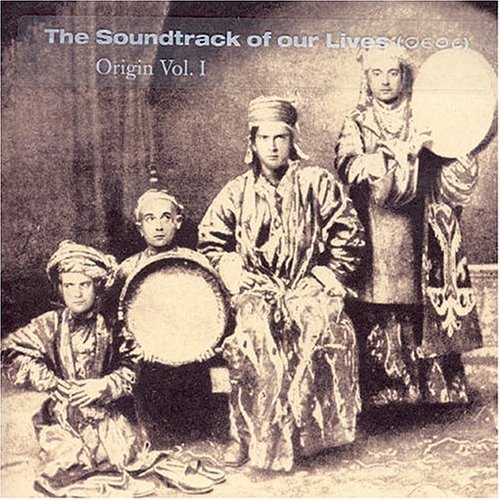
The Soundtrack of Our Lives - Origin Vol. I (Universal)

With already a grandiose name, the Swedish sextet free themselves with each album to take any and every musical direction possible that one band can make. On their fourth album Origin Vol. I, the Soundtrack of Our Lives flex their muscle built on 3 years of touring while showing off more of their melodic side.

On 2002's Behind the Music, the band attracted increased attention after flying just under the radar with their two previous releases; Welcome to the Infant Freebase (1996) and Extended Revelation (1998). Just as their visiblity as grown so as the band's creative confidence since first forming, over 10 years ago, after the end of Union Carbide Productions, the foundation for which the band owes their current place. A key strength that has carried over to the Soundtrack of Our Lives is the ability to give a fresh take on a style from music's past. They have soaked up the best qualities of bands like Pink Floyd, the Stooges and MC5, and the Who to create sounds that may be familiar ground but are filled with an excitement that gives the music a new life.

What started as a double album has turned into Origin Vol. I, the straight-forward rock album, with the follow-up said to be more heavily acoustic. The band hit the right chord on Behind the Music with the song "Sister Surround," one of the band's finest singles thus far. Unfortunately they couldn't grab onto a new power chord to capture that magic of "Sister Surround" which was a major reason for setting off the buzz on their third album. Though it doesn't deminish the quality of Origin Vol. I the lack of that one fiery standout track leaves you looking for just a little more. It's almost as if "Sister Surround" was a tease.

That aside there remain a handful of songs that beam with aggression and attitude of all sorts. "Transcendental Suicide" is the epic tune that Pete Townshend could have written for the Who on Who's Next. On "Bigtime" and "Mother One Track Mind," the amps are on overdrive as the band simply bulldoze their way through anything in their path. Truly not a one dimensional band, the Soundtrack of Our Lives can structure melodies like the best of them. "Heading For A Breakdown" balances the collective backing vocals to drive the hooks yet maintains a punch so not to leave the song flat. Singer Ebbot Lundberg takes on the lounge lizard persona in "Midnight Children" while on the striking "Song For The Others" conveys a wounded soul singing out to the great beyond.

Origin Vol. I takes the Soundtrack of Our Lives another step forward. They may look back to the past for inspiration but they definitely have not looked at their own past for ways of recycling old tricks.